The Chief Justice’s recent concurrence in the denial of rehearing in Umphress v. Steel (a certified question from the Fifth Circuit about judicial conduct) emphasized the elegance of the word “no”:
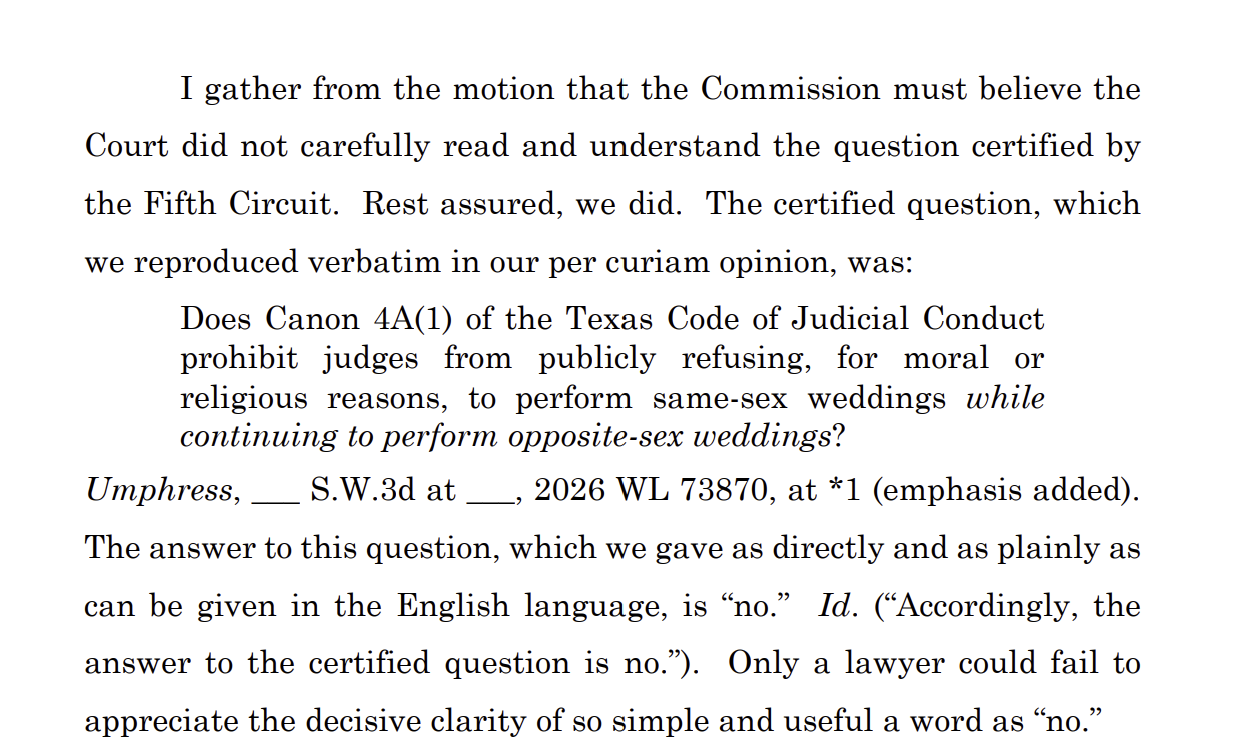
The Chief Justice’s recent concurrence in the denial of rehearing in Umphress v. Steel (a certified question from the Fifth Circuit about judicial conduct) emphasized the elegance of the word “no”:
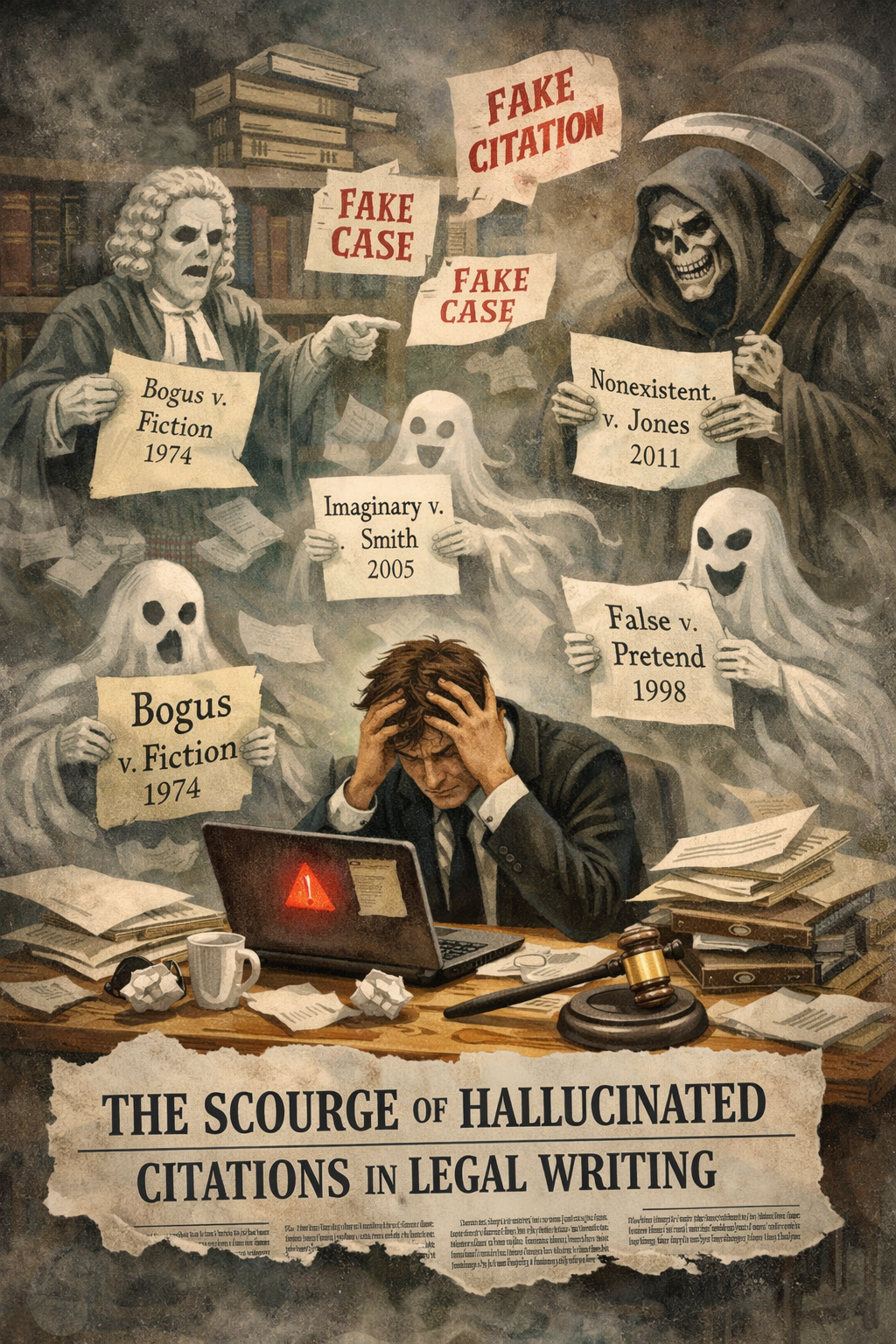 There have been two recent opinions about generative AI that you should know about
My friend Art Ayala recently visited the Texas Appellate Law Podcast to discuss the complexities of securing supersedeas bonds when a client faces an adverse verdict. Key topics include:
• Timing: Why counsel should consider advising clients to initiate the bonding conversation even before a judgment is entered.
• Process: How process typically flows from the initial call with a client to bond issuance.
• Collateral Options: Pros and cons of various collateral options.
You can listen to the full conversation here: Supersedeas Bonds in the Real World.
 In Burnett v. Aguilar Lozano, the Fifth Court of Appeals at Dallas addressed whether various evidentiary objections to summary judgment evidence are defects of form or substance-a distinction that matters because “deficiencies in form cannot be considered when there was no objection in the trial court,” while “substantive deficiencies pertain to the sufficiency of the evidence and can therefore be challenged and considered for the first time on appeal.”
These are objections to form:
These are substantive defects:
While parts of the nonmovant’s affidavit were conclusory and thus substantively deficient, the unauthenticated accident report was properly before the court due to the absence of objection, and raised a genuine fact issue on breach of duty. No. 05-24-01503-CV (Tex. App.-Dallas Feb. 12, 2026).
 In The Pink Panther Strikes Again, Inspector Clouseau famously asks: “Does your dog bite?” So too, the Fifth Court of Appeals, in Latcher v. Edwards, which rejected a negligence claim against a dog owner
Specifically, the Court held that the evidence of foreseeability was legally insufficient where the dog had never escaped from its enclosed backyard before, the owner did not know the side gate had been opened, and the dog had no history of startling, jumping on, or injuring anyone. Rejecting the plaintiff’s argument that the dog had been “roaming the neighborhood for a week” before the incident, the court found the evidence only showed the dog was at a shelter or with a shelter volunteer—not loose on the streets—during the week it took the owner to retrieve him. No. 05-24-01259-CV (Feb. 11, 2026)
In a fraudulent-lien case, the Fifth Court distinguished between different types of intent:
EarnhartBuilt also makes a brief argument that the nearly three-month delay in removing the lien from the Property after Preferred received the October 13, 2022 email created a genuine issue of material fact as to whether Preferred had knowledge that the lien was fraudulent when filed.
EarnhartBuilt relies heavily on authority, emphasizing that “intent is a fact question uniquely within the realm of the trier of fact because it so depends upon the
credibility of the witnesses and the weight to be given to their testimony.” Although intent may be inferred from a party’s subsequent acts, any inferences concerning Preferred’s intent from its three-month delay in releasing the lien, at most, relate to element 3 (an intent to cause financial injury) and not to element 1 (what Preferred knew at the time it filed the lien).
Earnhardbuilt LLC v. Preferred Materials, LLC, No. 05-24-00804-CV, Feb. 5, 2026 (citations omitted).
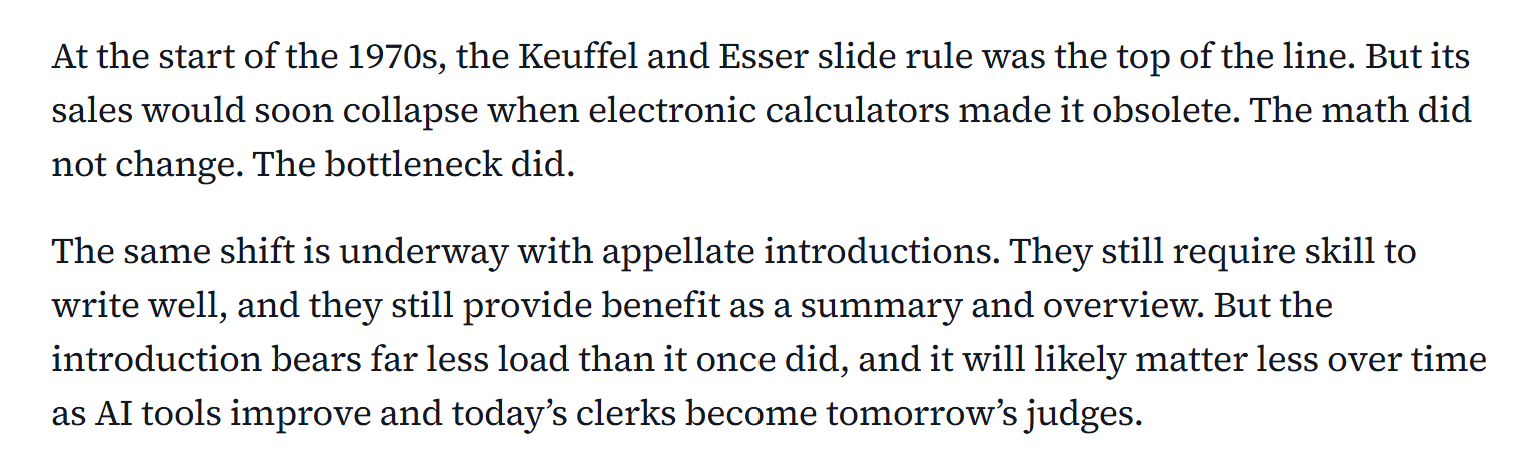
I recently published a short comment on the new Texas Rule of Appellate Procedure requiring a substantive introduction to petitions for review, in which I question the value of introductions in a time when generative AI can review and summarize the most complex of briefs in a few seconds.
 The Fifth Court granted mandamus relief in In re Pillar Income Asset Management, holding that a new-trial order based on “incurable” improper argument was an abuse of discretion because the challenged remarks—though often improper—were not so extreme or inflammatory that an instruction could not cure any harm.
On this record, and under the demanding substantive standard, the Court concluded that personal barbs at opposing counsel, aggressive treatment of an expert, references outside the record, statements of personal opinion, and brief appeals to local or religious identity were improper but curable, and therefore could not support a new trial without timely objections and requested curative instructions.
Distinguishing the Fifth Circuit’s recent Clapper decision that reversed because of improper argument, the Court underscored that Texas requires proof that the challenged rhetoric was “so extreme that a juror of ordinary intelligence could have been persuaded by that argument to agree to a verdict contrary to that to which he would have agreed but for such argument.” The Court summarized: “Incurable argument is rare.” 05-25-00205-CV; Jan. 14, 2026.