 Attached, some excellent proofreading advice for your briefs, motions, and letters in 2017! Best wishes for the New Year from 600Commerce. (A tip of the hat to @AnalyticalGrammar)
Author Archives: David Coale
 In Heritage Numismatic Auctions v. Stiel, a dispute about the the sale of rare coins, the Fifth Court affirmed the denial of a motion to compel arbitration, finding that the relevant documents were not adequately proved up by the sponsoring affidavit. The witness “did not testify that the documents in Exhibit F were ‘true and correct’ copies of the contracts or otherwise state that they were the originals or exact duplicates of the originals.” While the affidavit began with the phrase, “The facts contained herein are true and correct,” the Court held that “[t]he trial court could interpret this statement as asserting the factual averments in the affidavit were true and correct but not asserting the documents in Exhibit F were the originals or exact duplicates of the originals as required by Rule 902(10)(B)(2).” Finally, from a general description of the documents as “the various Terms and Conditions . . . ,” the Court held that “[t]he trial court could have concluded that [the witness’s] statement did not constitute testimony that the documents in Exhibit F were the originals or exact copies of the contracts.” No. 05-16-00299-CV (Dec. 16, 2016) (mem. op.)
 In a technical but financially critical decision, Eddington v. Dallas Police & Fire Pension System, the Fifth Court held that adjustments to the future interest rate paid on accounts established under a pension plan, sponsored by the beleaguered Dallas Police & Fire Pension system, did not violate the prohibition on benefit reductions contained in article XVI, section 66 of the Texas Constitution. No. 05-15-00839-CV (Dec. 13, 2016). Of general interest, a component of its analysis reviewed when a federal Fifth Circuit opinion about state law matters will be followed in state court.
 Yes, it arose in the unusual procedural posture of a Rule 736 home equity loan foreclosure, and no, it is not the recommended practice. That said, the relators in the case of In re:
  Priester successfully convinced the Fifth Court to reverse direction and, on rehearing, grant a writ of mandamus in their favor “[i]n light of the more developed record and clarified arguments . . . .” No. 05-16-00965-CV (Nov. 21, 2016) (mem. op.)
 While affirming a relatively straightforward judgment in a home loan dispute, the Fifth Court observed: “The unjust enrichment doctrine applies principles of restitution to disputes where there is no actual contract and is based on the equitable principle that one who receives benefits which would be unjust for him to retain ought to make restitution.” Ihde v. First Horizon Home Loans, No. 05-15-01084-CV (Nov. 28, 2016) (mem. op.) (emphasis added) A counterpoint in this practical but rarely-visited area of remedies law appears in City of Harker Heights v. Sun Meadows Land Ltd., 830 S.W.2d 313, 317 (Tex. App.–Austin 1992, no writ), which observes: “An action for money had and received may be founded upon an express agreement or one implied in fact, but it is not dependent upon either.” (emphasis added).
 I was on the trial team that won a $146 million verdict in Pecos, Texas last week; here is the Dallas Morning News’s recent story on the case.
 Plaintiffs won a lawsuit against their landlord about the handling of their security deposit. The Fifth Court affirmed, reversing only as to prejudgment interest. While the parties’ lease said that “[a]ny person who is a prevailing party in any legal proceeding brought under or related to the transaction described in this lease is entitled to recover prejudgment interest,” the plaintiffs recovered based on section 92.109(a) of the Property Code, which allows recovery of statutory penalties in the event of a landlord’s bad faith retention of the security deposit. Because “[p]rejudgment interest does not apply to statutory penalties imposed for wrongdoing,” and the underlying statute did not provide for recovery of prejudgment interest, the interest award could not stand. Frazin v. Sauty, No. 05-15-00879-CV (Nov. 6, 2016) (mem. op.)
From sister blog 600Camp – celebrate Halloween with these Five Recent Fifth Circuit Cases to Know. And don’t forget to vote for Super Lawyers by this Friday, October 28!
 A classic example of a “too soon” appeal appears in Bolden v. Fidelity Nat’l Title: “In the original petition, appellee sought both damages for breach of warranty of title and attorney’s fees. The trial court signed a default judgment awarding damages for breach of warranty of title. The default judgment is silent as to appellee’s claim for attorney’s fees. Because the claim for attorney’s fees remains pending, the judgment is not final.” No. 05-16-00398-CV (Oct. 14, 2016) (mem. op.)
The relator in the case of In re: Schindler Elevator complained that the trial court “refused to issue findings of fact and conclusions of law explaining the court’s reasoning for denying relator’s motion for leave to designate responsible third parties.” The Fifth Court found no abuse of discretion, noting that the RTP proceeding was not a “trial” within the meaning of the applicable rule, and that the relator had a remedy by direct appeal. No. 05-16-01172-CV (Oct. 10, 2016) (mem. op.)
 If ever a case illustrated a trap for the unwary, it is IDA Engineering v. PBK Architects, in which the plaintiff sued exactly four years after the termination of its contractual relationship. Unfortunately, the invoices upon which its damage claim relied were issued before the contract termination, and the contracts contained this language about payment: “Invoices will be issued monthly, per percentage of completion or per phase and will be due upon issuance date.” (emphasis added). Accordingly, the claim was barred by limitations. No. 05-15-01418-CV (Oct. 4, 2016) (mem. op.)
Axiomatic, but like many other basic mandamus concepts, worth remembering:
- If the trial court does not have jurisdiction to rule on relator’s motion, the motion cannot be categorized as “properly filed” for purposes of a potential writ of mandamus to compel a ruling;
- And if the the trial court does not have jurisdiction to rule on the motion, “it logically follows that it does not have a ministerial duty to rule on the motion.”
In re: Guzman, No. 05-16-01109-CV (Sept. 29, 2016) (mem. op.)
A basic point, but one that bears frequent repetition, and the Court of Criminal Appeals concurrence ultimately cited by the Fifth Court is a quick and worthwhile read.: “As the party seeking relief, the relator has the burden of providing the Court with a sufficient record to establish his right to mandamus relief.” In re: Johnson, No. 05-16-01094-CV (Sept. 27, 2016) (mem. op.) (citing In re: Jones, No. 05-16- 00230-CV, 2016 WL 836835 (Tex. App.—Dallas March 4, 2016, orig. proceeding) (mem. op.) (citing Lizcano v. Chatham, 416 S.W.3d 862, 863 (Tex. Crim. App. 2011) (orig. proceeding) (Alcala, J. concurring))).
In its order denying a mandamus petition in the case of In re: Adelphi Group, the Fifth Court reminds: “Although parties may expend time and money if they are ordered to arbitration improperly, delay and expense—standing alone—will not render the final appeal inadequate. Further, mandamus as a remedy for review of orders compelling arbitration should be limited to the comparatively rare cases where the legislature has through statute expressed a public policy that overrides the public policy favoring arbitration.” No. 05-16-01060-CV (Sept. 22, 2016) (mem. op.)
 The Fifth Court is the first appellate court in Texas to offer an extension of TAMES that allows attorneys to see non-public documents; here is the official announcement.
 Beasley v. Richardson, while involving facts unique to pro se litigation, provides a valuable reminder about preservation with relation to the handling of a nonsuit: “Error in dismissing a case with prejudice cannot be raised for the first time on appeal and must be presented to the trial court. To preserve a complaint of error in a judgment for appellate review, Beasley was required to inform the trial court of his objection by a post-judgment motion to amend or correct the judgment or a motion for new trial.” (citations omitted). No. 05-15-01156-CV (Sept. 20, 2016) (mem. op.)
Happy fifth birthday to the sister blog, 600 Camp, which follows commercial litigation in the U.S. Court of Appeals for the Fifth Circuit.
 Henry S. Miller Commercial Co. lost a trial on a fraud claim but succeeded in a later malpractice claim against its trial counsel. The Fifth Court resolved two issues – (1) postjudgment assignment of malpractice claims as part of a reorganization was acceptable where “Here, HSM asserted its own malpractice claim against the Lawyers in its own name. It pursued its own claim through trial and judgment. Under these circumstances, HSM’s right ‘to bring [its] own cause of action for malpractice is not vitiated’ by the assignment to its judgment creditors” (applying Tate v. Goins, Underkofler, Crawford & Langdon, 24 S.W.3d 627, 629 (Tex. App.—Dallas 2000, pet. denied)); and (2) the trial court erred in dismissing HSM’s claim for gross negligence based on the failure to designate a key responsible third party. Accordingly, because a new trial was required on punitive damages, it was also required on compensatory damages, and thus liability as well. Henry S. Miller Comm’l Co. v. Newsom, Terry & Newsom LLP, No. 05-14-01188-CV (Sept. 14, 2016) (mem. op.)
Here is my PowerPoint from my “Fifth Circuit Update” presentation at the Advanced Civil Appellate Course in Austin. Note that it includes some initial notes on Globeranger-AG v. Software AG, a major intellectual property opinion released by the U.S. Fifth Circuit earlier this week.
 “Legal-malpractice damages are the difference between the result obtained from the client and the result that would have been obtained with competent counsel. Here, the result obtained, foreclosure, was inevitable concerning [Plaintiff’s] failure to pay her mortgage in her past and her refusal to pay in order to bring the loan current. Under these circumstances . . . there is no evidence of damages resulting from any alleged legal malpractice.” Sheetz v. Slaughter, No. 05-14-00982-CV (Aug. 31, 2016) (mem. op.)
The Fifth Court has now joined the line of cases stating that CPRC § 38.001 only allows an award of attorneys fees against certain kinds of business entities (although bypassing the actual application of that statement on the specific, conflicting facts presented about the defendants’ business structure): “Under the plain language of section 38.001, a trial court cannot order limited liability partnerships (L.L.P.), limited liability companies (L.L.C.), or limited partnerships (L.P.) to pay attorneys’ fees.” Varel Int’l Indus., LP v. PetroDrillBits Int’l, Inc., No. 05-14-01556-CV (Aug. 30, 2016) (mem. op.)
 Ten Hagen Excavating, Inc. v. Castro-Lopez presents a detailed review of the evidence about a serious truck accident, involving issues of tort law beyond the usual scope of this blog. As a matter of style, the opinion is notable for deftly using accident photos in its description of and analysis of the issues, as well as a diagram of how the accident happened. No. 05-15-00902-CV (Aug. 29, 2016).
 Despite a contract between Texas Instruments and Volt, an employment agency, saying that Volt was an independent contractor, the Fifth Court reversed a jury verdict on the issue of whether Udell – a worker supplied by Volt – was an employee for p
 urposes of workers compensation. Reviewing the record in detail, the Court concluded that “Udell was working on TI’s premises, in furtherance of TI’s day-to-day business, and the detail
s of Udell’s work that gave rise to his injury were directed by TI.” Texas Instruments v. Udell, No. 05-14-01042-CV (Aug. 24, 2016) (mem. op.)
 In Cooper v. Campbell, the Fifth Court reviewed the key principles that govern “equitable remedies such as disgorgement and forfeiture to remedy a breach of fiduciary duty” —
- “The central purpose of forfeiture as an equitable remedy is not to compensate the injured principal, but to protect relationships of trust by discouraging disloyalty.
- “Disgorgement is compensatory in the same sense as attorney fees, interest, and costs, but it is not damages. . . . In fact, a claimant need not prove actual damages to succeed on a claim for forfeiture because they address different wrongs. In addition to serving as a deterrent, forfeiture can serve as restitution to a principal who did not receive the benefit of the bargain due to his agent’s breach of fiduciary duty. . . .”
- “The amount of disgorgement is based on the circumstances and is within the trial court’s discretion.”
The Court then remanded for more fulsome consideration of factors identifed in ERI Consulting Engineers v. Swinnea, 318 S.W.3d 867 (Tex. 2010). No. 05-15-00340-CV (Aug. 24, 2016) (mem. op.) On the general subject of disgorgement, other useful references from the Fifth Court are its recent opinion in Premier Pools Management Corp. v. Premier Pools Inc., and McCullough v. Scarbrough, Medlin & Associates, 435 S.W.3d 871, 904 (Tex. App.-Dallas 2014, pet. denied).
I n some detail, the district court ordered Altesse Healthcare not to deplete the assets of a business, whereupon: “Altesses’s actions in failing to comply with the TRO resulted in destroying the value of the company over which the lawsuit was based. In essence, Altesse took over running the company and then failed to make the scheduled payments when due, leaving the Wilsons without the company or payment. After the trial court ordered Altesse to return the company to the Wilsons, Altesse delayed and by the time it returned the necessary assets to run the business, there was little left to run.” The Fifth Court affirmed the trial court’s detailed order awarding “death penalty” sanctions and other penalties, including contempt. Altesse Healthcare Solutions v. Wilson, No. 05-15-00906-CV (Aug. 23, 2016) (mem. op.)
 We all too easily forget that the requirements of a good appellate brief are defined by law, as recently noted in Lau v. Reeder, No. 05-14-01459-CV (Aug. 16, 2016) (mem. op.)
As to the issues presented, “a brief must state concisely all issues for review and reveal the legal questions we are called upon to decide. See TEX. R. APP. P. 38.1(f); Bolling v. Farmers Branch Indep. Sch. Dis., 315 S.W.3d 893, 896 (Tex. App.—Dallas 2010, no pet.).”
As to the record citations that accompany the argument, the Justices “have no right or obligation to search through the record to find facts or research relevant law that might support an appellant’s position because doing so –4– would ‘improperly transform this Court from neutral adjudicators to advocates.’ Chappell v. Allen, 414 S.W.3d 316, 321 (Tex. App.—El Paso 2013, no pet.)”
And as to good draftsmanship, a brief does not violate the rules but is notably unhlepful when the table of contents “indicates that the argument portion of the brief for all nine issues is located on pages 18 to 94 without any indication or notation as to where specific issues are addressed,” and the 77-page argument section “also does not denote where each of the nine issues is discussed and the only arguable headings in this section do not identify the issues to which they are attached.”
 My colleagues Michael Hurst and Jonathan Childers recently spoke at the Dallas Bar Association Oil & Gas Update; here is their powerpoint, which provides a great summary of the law today on the key topics in oil and gas cases.
 While affirming a $4 million judgment related to a truck accident – most of which involved a series of Daubert challenges — the Fifth Court provided some rare appellate guidance about the use of video animation in the courtroom. Specifically, Smith – the plaintiff’s accident reconstruction expert – prepared an animation to accompany and illustrate his testimony about how the accident occurred.
The Court found no error. As to foundation, it said: “As to the video animation, we note the video was not admitted into evidence but was shown during Smith’s testimony for demonstrative purposes. Defense counsel objected ‘on the grounds of 403.’ Smith testified he measured Gaston’s truck and two similar trailers ‘in order to get data to fill in the animation.’ It was not possible to ‘match tire to track,’ but Smith made a generalized analysis of marks on the roadway he described as an ‘approximation.’ Smith testified the animation was not a simulation and ‘not an exact replication of what happened,’ but it was ‘an accurate representation of what occurred.’”
As to admissibility and waiver, it held: “Earlier in the trial, Smith was allowed to express his underlying opinion without objection when the testimony was presented to the jury. Since the animation was a graphic depiction of the opinion admitted into evidence without
objection, Greenwood’s trial objection to the video depiction of that opinion was waived. Video animation and other demonstrative evidence that ‘summarize, or perhaps emphasize, testimony are admissible if the underlying testimony has been admitted into evidence, or is subsequently admitted into evidence.'” (citations omitted) Greenwood Motor Lines v. Bush, No. 05-14-01148-CV (Aug. 17, 2016).
 Plaintiffs sued for libel, based on four articles in the Korea Town News (N.B. – Dallas has the largest Korean-American community in Texas). Unfortunately, the TCPA “anti-SLAPP” statute applied, because the articles dealt with “the proposed sale of an office building . . . for use as a community center, which would be purchased “in part with funds raised by the public.” And the statements at issue were not actionable, as they “the majority of these statements concern the value of the building . . . the appraisal value of the building, the purchase price, and its market value.” Accordingly, the Fifth Court affirmed the dismissal of Plaintiffs’ claim — and the resulting award of attorneys fees under the TCPA. Mansik & Young Plaza LLC v. K-Town Management LLC, No. 05-15-00353-CV (Aug. 15, 2016) (mem. op.)
 In Premier Pools Management Corp. v. Premier Pools Inc., the Fifth Court found that a successful trademark plaintiff had established sufficient evidence of secondary meaning for the phrase “Premier Pools,” noting — in particular — the plaintiff’s proof about its advertising about and long use of the name, as well as the testimony of nine impartial witnesses about the issue of confusion. Similar evidence supported the findings for liability, damages, and disgorgement. The Court reversed the related declaratory judgment (and with it, the attorney’s fees award), finding that the “claim added nothing and provided access to no remedy that was not otherwise available . . . ” No. 05-14-01388-CV (Aug. 12, 2016) (mem. op.)
 Due to recent events, the courthouse is closed today. Let us think of the brave men and women of our police forces.
- “A statement that makes up the parties’ contact is an op
 erative fact, a necessary part of a cause of action, and is not hearsay.”
 - “A document created by one business may become a record of a second business if the second business determines the accuracy of the information generated by the first business.”
- A document is not hearsay when “it represents the legally operative fact of demand, a necessary part of [a] breach of contract case.”
Humphrey v. Yancey, No. 05-15-00653-CV (June 30, 2016) (mem. op.)
 The appeal of an eviction case was resolved largely by the lack of a reporter’s record in Lyons v. Polymathic Properties, Inc. The opinion reminds of several basic principles triggered when a reporter’s record is required, which are worth remembering when considering whether to obtain a record, and in responding to an argument if an opponent has not obtained one:
- The judgment of the trial court implies all necessary findings of fact to sustain the judgment; “[i]n other words, we must presume the missing reporter’s record supports the decisions of the trial court”;
- Attaching a partial transcript to a brief is not a substitute for a formal reporter’s record; and
- Statements in a brief that are unsupported by the record cannot be accepted as facts.
No. 05-15-00408-CV (June 29, 2016) (mem. op.)
Celebrate summer with 600 Summer Camp and five good cases to know from the Fifth Circuit in 2016 — and one special bonus!
 In review of a Dallas case, in In re J.B. Hunt Transport, the Texas Supreme Court clarified the standards for mandamus review of a plea in abatement based on a “dominant jurisdiction” dispute between two Texas courts with jurisdiction over similar cases. The Court confirmed that “[In re: Prudential, Ins. Co., 148 S.W.3d 124 (Tex. 2004) indeed abrogates [Abor v. Black, 695 S.W.2d 564 (Tex. 1985)]’s inflexible understanding of an adequate remedy by appeal. Permitting a case to proceed in the wrong court necessarily costs ‘private parties and the public the time and money utterly wasted enduring eventual reversal of improperly conduct proceedings.'” On the merits, the Court found that there had not been a sufficient factual showing to “estop the plaintiff in the prior action from asserting his plea in abatement. No. 15-0631 (May 27, 2016).
 Texas’s far-flung and complicated court system produces a stream of litigation about conflicts between different jurisdictions. In Enexco v. Staley, the Fifth Court took the unusual step of granting a writ of prohibition against a district court in Nacogdoches County, finding that “the Nacogdoches proceeding must be stayed to prevent interference with this Court’s jurisdiction in deciding this pending appeal.” No. 05-15-01047-CV (June 21, 2016) (mem. op. & order)
 . . . a seemingly academic question, but one of great significance to the guarantor whose liability rested on whether a transfer occurred. Acknowledging the Texas Supreme Court’s broad definition of a “transfer” as “Any mode of disposing of or parting with an asset or an interest in an asset, including a gift, the payment of money, release, lease, or creation of a lien or other encumbrance. . . . every method—direct or indirect, absolute or conditional, voluntary or involuntary—of disposing of or parting with property or an interest in property,” the Fifth Court held that standard release language in a settlement agreement did not create a transfer, even though the overrarching goal of the settlement was to bring an end to one development project, so a new one could proceed. Argent Development LP v. Las Colinas Group LP, No. 05-15-00626-CV (June 20, 2016) (mem. op.)
Over the weekend, I participated in a DAYL skills seminar, making a mock appellate argument against my friend, the capable Chad Baruch. Judge Martin Hoffman led the seminar, and Justices Molly Francis, Ada Brown, and Bill Whitehill presided over the argument.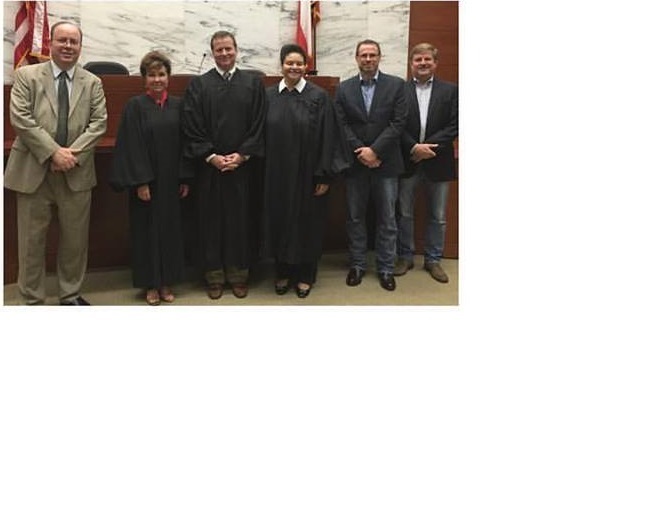
 Alpha Omega alleged that a law firm breached its responsibilities as an escrow agent. In ts findings of fact and conclusions of law, the trial court said: “11. Alpha Omega, Inc. did not prove by a preponderance of the credible evidence that a fiduciary relationship existed between it and the Defendants.” The Fifth Court disagreed, and then found harm because the trial court “did not evaluate the remaining elements of fiduciary breach under the proper legal standards” and “there was some evidence of the remaining elements of fiduciary breach, such that the trial court could have reached the opposite result had it not erred in finding 11.” Accordingly, it reversed and remanded. Alpha Omega CHL, Inc. v. Min, No. 05-15-00124-CV (June 16, 2016) (mem. op.)
I recently spoke at the University of Texas appellate course to provide an update on recent Fifth Circuit cases, here is my PowerPoint from that presentation.
 Rainier Income Fund I, Ltd. v. Gans presented an appeal from the district court’s confirmation of the rulings of a “special judge” appointed under chapter 151 of the Texas Civil Practice & Remedies Code. The appellant moved for a new trial before the district court; the appellee contended that it was not effective to extend the appellate deadline, as the district court’s power to grant a new trial in this posture is significantly limited by chapter 151. After a thorough review of the statute and the general principles surrounding the motion for new trial in Texas, the Fifth Court concluded that the motion was effective and the deadline was extended. In particular, it noted the Texas Supreme Court’s reminder in Old Republic Ins. Co. v. Scott, 846 S.W.2d 832, 833 (Tex. 1993) that: “The filing of a motion for new trial in order to extend the appellate timetable is a matter of right, whether or not there is any sound or reasonable basis for the conclusion that a further motion is necessary.” No. 05-00460-CV (June 7, 2016) (mem. op.)
The appellate bar is still getting used to section 51.014(d) of the Civil Practice & Remedies Code, under which a “permissive” interlocutory appeal may proceed under certain circumstances. In Hartford Accident & Indemnity Co. v. Seagoville Partners, after initially granting leave to appeal under that section, the Fifth Court reconsidered whether the trial court had in fact made “a substantive ruling on a controlling question of law” as required by the statute. After thoroughly reviewing the procedural posture of the case, the Court concluded that the trial court could have also decided on the basis of whether the evidence was sufficient to raise a fact issue under the legal standard advocated by the appellant. Accordingly, it dismissed the appeal. No. 05-15-00760-CV (June 9, 2016) (mem. op.)
Last Friday, blog publisher David Coale spoke about recent federal cases on sanctions and professional responsibility issues; for some ethics CLE self-study, here is the handout that he used.
 LPCH partner Britta Stanton, vice-Chair of the Dallas Bar Association Trial Skills Association, recently published this good article about Impeachment in Five Simple Steps under the Texas Rules of Evidence.
The oral argument in the high-profile partnership dispute of Enterprise Products Partners LP v. Energy Transfer Partners LP will proceed at 3:00 on Wednesday, April 20, 2016. (LPCH represents Appellee ETP.)
 The unfortunate plaintiff in K.W. Ministries v. Auction Credit Enterprises had trouble responding to the defendant’s summary judgment motions. They were set for hearing on September 15, 2014. On September 8, the plaintiff filed a response that addressed only one of the claims and included no evidence. Three days before the hearing, it filed a “Document Supplement” to its response, but not a motion seeking leave to file that supplement. Then, on the morning of the hearing, the plaintiff filed an amended response accompanied by an affidavit and other materials. At the hearing, its counsel asked the court to “receive my oral motion for leave to amend and accept our response to the summary judgment that was filed this morning.” Asked why he had not provided an affidavit to support the resp
 onse on the day it was due instead of that morning, counsel answered: “I don’t have a satisfactory answer for that, Your Honor.” The response was thus not considered, and the Fifth Court affirmed, using the plain language of the relevant rule of procedure to reject plaintiff’s arguments about why it should have been. No. 05-14-01392-CV (March 21, 2016) (mem. op.)

Celebrate St. Patrick’s Day with five recent cases to know from the Dallas Court of Appeals; click here to access the list and analysis. And watch out for leprechauns!
AdvoCare filed a petition to take a Rule 202 deposition from Michael Moussa; Moussa, joined by Shereef Kamel, counterclaimed. AdvoCare obtained a $3,500 sanctions award against Kamel and his counsel related to that filing. They appealed, arguing that “AdvoCare never asserted any affirmative claim for relief in the suit, the rule 202 petition has been ‘superseded and rendered moot’ by the institution of arbitration proceedings initiated by AdvoCare against Moussa and Kamel, and their counterclaims are no longer pending because they have nonsuited the counterclaims.” The Fifth Court disagreed because no written order confirmed the nonsuit; accordingly, it dismissed for lack of appellate jurisdiction over an appealable final order. Kamel v. AdvoCare Int’l, L.P., No. 05-15-01295-CV (March 4, 2016) (mem. op.)
In the otherwise unexceptional case of In re Thorpe, the Fifth Court augmented its customary citation when denying mandamus relief [“Ordinarily, to obtain mandamus relief, a relator must show both that the trial court has clearly abused its discretion and that relator has no adequate appellate remedy. In re: Prudential Ins. Co., 148 S.W.3d 124, 135–36 (Tex. 2004) (orig. proceeding)”] with an additional one: “Mandamus is not a substitute for appeal. In re: Bernson, 254 S.W.3d 594, 596 (Tex. App.–Amarillo 2008, orig. proceeding).” No. 05-16-00148-CV (Feb. 25, 2016) (mem. op.)
Appellants filed a bill of review about the dismissal of their case, but could not prove a lack of fault: “Because appellants failed to pursue all adequate legal remedies when they did not appeal the denial of [the] motion to reinstate, appellants could not plead and prove the third element of a bill of review.” McCurdy v. Oeftering, No. 05-14-01353-CV (Feb. 19, 2016) (mem. op.)
 Appellees sued Pak for breach of contract and won a judgment in their favor after a bench trial. Pak requested findings of fact and conclusions of law. Then, in a series of unfortunate events: the trial judge did not enter findings or conclusions; Pak filed a notice of past due findings and conclusions on December 31 — the judge’s last day in office — and the successor judge did not enter findings until January 12, after the period specified by the Rules. The panel majority reasoned that the successor judge (who did not participate in the trial) had no authority to make findings and conclusions, and that Pak did not have to object at the time to preserve his appellate complaint about them. It then found harm, reversed the judgment against Pak, and remanded for proceedings consistent with the opinion. A detailed dissent would have found a waiver on the specific facts and circumstances of the case, noting the original judge’s continued availability. Pak v. Ad Villarai, LLC, No. 05-14-01312-CV (Feb. 16, 2016) (mem. op.)
 Schultz, owner of a chain of movie theaters, did not want to pay Banowsky, a licensed Texas attorney, for helping Schultz find a theater location. Schultz won summary judgment based on the Texas Real Estate Licensing Act, primarily because Banowsky admitted that his work did not involve legal services. The Fifth Court reversed: “[Schultz] argues that Banowsky’s construction of the Act is both unreasonable and favors the individual interest of an attorney over the interest in protecting the public from unlicensed, unscrupulous, or unqualified persons. But the fact remains that the plain language of the statute exempts attorneys from all requirements of the Act.” Banowsky v. Schultz, No. 05-14-01624-CV (Feb. 10, 2016) (mem. op.)
DFW Advisors sued its former bookkeeper, Ervin, alleging misappropriation. She responded to a request for disclosure by saying that she did acted with consent. At trial, she sought to introduce evidence of consent, in the form of testimony of an affair with DFW’s principal. The trial court allowed the testimony, over DFW’s objection, and the Fifth Court affirmed “[T]his response sufficiently disclosed Ervin’s basic defense, which was that she had consent to take the money. [Tex. R. Civ. P.] 194.2 only requires disclosure of a party’s basic assertions and did not require Ervin to disclose the details of how consent was given.” DFW Advisors Ltd. v. Ervin, No. 05-14-00883-CV (Feb. 11, 2016) (mem. op.)
The wrenching facts of the paternity dispute in In re: H.H. provide a rare example of when a finding of legally insufficient evidence can justify remand rather than rendition. The underlying rule, Tex. R. App. P. 43.3, requires that “When reversing a trial court’s judgment, the court must render the judgment that the trial court should have rendered, except when: (a) a remand is necessary for further proceedings; or (b) the interests of justice require a remand for another trial.” Under the rule, in the Fifth Court: “Remand is appropriate when, for any reason, a case has not been fully developed below.”
Here, the child “was barely a year old when the trial court entered the decree of termination and had been in the custody of TDFPS for almost her entire life, never at any time living with Father. . . . Father has been incarcerated since before learning he was potentially the biological father of H.H. and admits in his appellate brief that he remains incarcerated. However, there is no evidence in the record regarding when Father will be released or his ability to care for H.H. in a manner consistent with her interests. Additionally, neither Father nor his attorney appeared at the hearing[.]” Accordingly, ” a remand of the case against Father is appropriate to further develop the record and is in the interest of justice.” No. 05-15-01322-CV (Feb. 12, 2016) (mem. op.)
 Tunnell sued Archer for negligence after a truck accident involving Archer’s cattle. The trial court declined to dismiss Tunnell’s claim for failure to file an expert report under a statute related to claims against health care providers (Archer was a doctor), and Archer appealed that denial. After a Texas Supreme Court opinion clarified the underlying statute,Tunnell contended that Archer’s appeal not only no longer had merit, but had become frivolous and sanctionable.
After Archer continued with the appeal on other grounds, the Fifth Court agreed with Tunnell and sanctioned Archer and his counsel for the costs of the motion to dismiss: “After the supreme court’s opinion in Ross, there were no reasonable grounds for an advocate to believe the case could be reversed. However, appellants did not dismiss this frivolous appeal. Instead, appellants’ counsel filed a brief on the merits asserting  ERISA preemption based on non-existent orders that this Court lacked jurisdiction to consider. No reasonable counsel could believe the ERISA-preemption argument was a reasonable ground for reversal in this case when there was no written order on a motion asserting the argument and no statute permits an interlocutory appeal from such an order. In these circumstances, we conclude that appellants and their counsel’s actions are so egregious as to warrant the award to Tunnell of just damages from appellants and their counsel for their pursuit of this frivolous appeal.” Archer v. Tunnell, No. 05-15-00459-CV (Feb. 9, 2016) (mem. op.)
 Dharma and Hahn divorced. The trial court entered a final decree. Dharma appealed the trial court division of property; primarily, an interest in her medical practice. Hahn argued that she accepted the benefits of the decree by selling a related entity and encumbering the practice’s assets, and the Fifth Court agreed, finding that she “exercised control over substantial assets she received in the trial court’s property division.” The Court rejected an argument that the “acceptance of benefits” doctrine did not apply, based on her view of what would likely happen on remand, because that did not establish an “unquestionable” right as required by the limits on that doctrine. In re S.B.H., No. 05-14-00585-CV (Feb. 5, 2016) (mem. op.)
 Self-explanatory: “Here, the record shows the trial court set the show cause hearing for November 12. The record does not contain any notice for any other hearing that day, nor does it contain notice of a final trial setting. Thus, while Pollard had reasonable notice that the issue before the trial court on November 12 was whether the independent executor should be removed, he had no notice that the hearing would result in a final determination of his homestead rights. To the extent the trial court considered and ruled Pollard abandoned his homestead rights in the Beverly Drive house or on any issues other than the show cause, the trial court erred. Because Pollard did not receive proper notice, his due process rights were violated, and we must reverse the trial court’s order.”
 Echoing Justice Marshall’s classic head fake in Marbury v. Madison about jurisdiction, the case of In re Ralston Outdoor Advertising Ltd. offered a similar maneuver about Texas mandamus standards. After first expanding the Fifth Court’s usual citation to In re: Prudential Ins. Co., 148 S.W.3d 124 (Tex. 2004) to include its discussion of balancing (“An appellate remedy is ‘adequate’ when any benefits to mandamus review are outweighed by the detriments.”), the Court then denied mandamus relief based on longstanding pre-Prudential precedent : “Texas courts have long held that a plaintiff denied a default judgment has an adequate appellate remedy.” (citing Jackson v. McKinsey, 12 S.W.2d 1044, 1045 (Tex. Civ. App.—Fort Worth 1928, no writ)).
 The Fifth Court continues to carefully police the boundaries of judicial admissions. In a family law case, it observed: “In her original motion to modify, Mother did not request the amount of child support be modified; rather she requested only that the order be modified to impose greater restrictions on Father’s access to [Child]. Therefore, Mother’s statement there had been a material and substantial change in circumstances was directed toward possession of and access to J.C.J., not the previously ordered child support. Accordingly, Mother did not make a ‘clear, deliberate, and unequivocal’ statement in her original motion to modify that there had been a material and substantial change in circumstances relating to Father’s financial condition or to the amount of child support Father had been ordered to pay.” In re JCJ, No. 05-14-01449-CV (Jan. 28, 2016) (mem. op.) (applying Horizon/CMS Healthcare Corp. v. Auld, 34 S.W.3d 887, 905 (Tex. 2000)).
 A high-profile fee dispute led to holdings that (1) an attorney can recover in quantum meruit in connection with an oral contingent fee agreement, notwithstanding the other legal problems with such agreements; (2) legally sufficient evidence of the attorney’s “valuable compensable global settlement services” supported the verdict on his quantum meruit theory; (3) claimed error on the narrow scope of a fiduciary duty instruction was not preserved without a specific objection to the scope issue; and (4) the trial court did not abuse its discretion in refusing a spoliation instruction, when evidence showed that the destruction of the relevant emails resulted from a routine upgrade process. Shamoun & Norman, LLP v. Hill, No. 05-13-01634-CV (Jan. 26, 2016). The Court rendered judgment on quantum meruit.
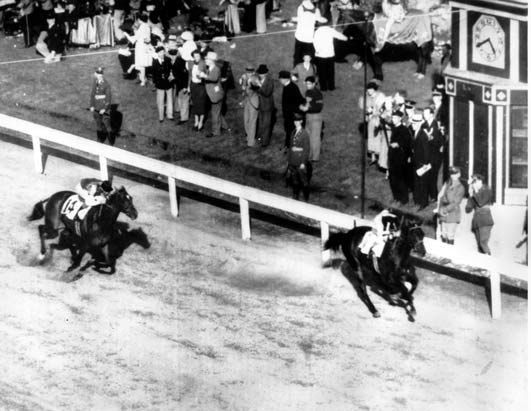 It really can happen in the appeal of a temporary injunction — “If, while on appeal of the granting or denying of the temporary injunction, the trial court renders final judgment, the case on appeal becomes moot.” Santiago v. Bank of New York (Jan. 25, 2016) (mem. op.) (citing Isuani v. Manske-Sheffield Radiology Group, P.A., 802 S.W.2d 235, 236 (Tex. 1991) (per curiam)).
Graman v. Graman involved a contentious dispute about the operation of a family restaurant business. On a fraud claim related to a loan, a witness testified to a conversation with the defendant: “We ended up talking about his loans his parents made to him and he told me that he never intended to pay his parents back at that point in time . . . He told me that he never intended on paying them back — and that’s why he never signed on what I recall him telling me was approximately $850,000. Finding that the first statement was not evidence of the defendant’s intent at the time of the loans, the Fifth Court then found: “As for the second statement, a fact finder could determine that statement showed Jason’s intent at the time of all the loans,” and reversed a no-evidence summary judgment on this claim. No. 05-14-01254-CV (Jan. 20, 2016) (mem. op.)
The issue in Tempay, Inc. v. Tanintco, Inc. was whether a notice of assignment, required to be sent to an account debtor as part of a factoring arrangement, satisfied section 9.406 of the UCC. That provision requires that the notice “reasonably identify the rights assigned,” and courts have divided about exactly what it requires, and whether summary judgment is appropriate. Here, in an analysis of broader interest about the appropriate standards for summary judgment, the Fifth Court found fact issues about the adequacy of the notice and whether it had been revoked. No. 05-15-00130-CV (Jan. 15, 2016) (mem. op.)
Highland Capital sued the Looper Reed law firm, who represented a former employee in litigation with Highland, alleging that the firm committed several torts against Highland during the course of that representation. The Fifth Court affirmed the dismissal of those claims on immunity grounds: “[T]he actions themselves—acquiring documents from a client that are the subject of litigation against the client, reviewing the documents, copying the documents, retaining custody of the documents, analyzing the documents, making demands on the client’s behalf, advising a client to reject counter-demands, speaking about an opposing party in a negative light, advising a client on a course of action, and even threatening particular consequences such as disclosure of confidential information if demands are not met—are the kinds of actions that are part of the discharge of an attorney’s duties in representing a party in hard-fought litigation.” Highland Capital Management LP v. Looper Reed & McGraw, PC, No. 05-15-00055-CV (Jan. 14, 2016) (mem. op.) (applying Cantey Hanger, LLP v. Byrd, 467 S.W.3d 477, 481 (Tex. 2015)).
After a deadly 18-wheeler accident, the trucking company “decided to have the remains of the tractor and part of the trailer cut in half and crushed.” The district court allowed a spoliation instruction in the subsequent litigation, and the Fifth Court affirmed, noting: “the severity of the crash, [the CEO’s] years of experience in the industry, his previous dealings with obtaining police reports, and his awareness to preserve the [electronic control mechanism].” That said, particularly given the company’s protection by the workers’ compensation statutes, the death penalty sanctions entered by the district court did not have a “direct relationship” to that destruction. In re: J. H. Walker Inc., No. 05-14-01497-CV (Jan. 15, 2016) (mem. op.) This opinion presents a thoughtful application of the Texas Supreme Court’s recent analysis of spoliation in Brookshire Brothers, Ltd. v. Aldridge, 438 S.W.2d 9 (Tex. 2014).
 In recently dismissing an appeal, the Fifth Court reminded that as a “fictional legal person,” “a corporation may only appear through an attorney” in court proceedings, and summarized the cases on this point. Temple of the Supreme Mother Goddess Mahadevi Shakit of America, Corp. v. Wells Fargo Bank N.A., No. 05-15-01289-CV (Jan. 8, 2016) (mem. op.)
After the Texas Supreme Court’s reversed the Fifth Court’s analysis of a shareholder oppression claim in Ritchie v. Rupe, 443 S.W.3d 856 (Tex. 2014), it remanded for consideration of a parallel “informal fiduciary duty” claim. On remand, the Fifth Court rejected that claims, concluding: (1) standing alone, “evidence of domination and control” by the majority shareholder would not establish the necessary duty, and (2) the various familial and business relationships between the plaintiff and the defendants were not enough to establish a relationship of trust and confidence, notwithstanding the interaction of various family trusts over the years. Ritchie v. Rupe, No. 05-08-00615-CV (Jan. 12, 2016) (mem. op.)
Plaintiffs sought damages for losing a telecommunication contract with DISD. The defendants argued that, in the absence of any evidence of acts of fraudulent concealment, limitations should run from 2006 when Plaintiffs received their last payment. The Fifth Court agreed, rejecting Plaintiffs’ counterargument that limitations did not begin to run until the federal agency overseeing the contract had completed its investigation of the situation. Lazo Technologies v. Hewlett-Packard, No. 05-14-01060-CV (Jan. 7, 2016) (mem. op.)
After the second mediation of a wrongful death case failed to yield a settlement, the trial judge ordered the Chief Claims Officer (a resident of Alabama not otherwise involved in the case) of the defendant’s carrier (a nonparty) to appear at a show cause hearing. The Fifth Court granted a mandamus petition about that order: “[W]e conclude the judge lacked jurisdiction to order Thomas, a non-party who did not attend either mediation and who lives outside the trial court’s subpoena range, to appear and explain why ProAssurance should not be sanctioned.” In re ProAssurance Ins. Co., No. 05-15-01256-CV (Jan. 4, 2016) mem. op.)
 A business involved in the fuel purchases of a convenience store (right) obtained a $344,000 default judgment against an individual involved with the store’s operations. The Fifth Court set aside the judgment under the Craddock factors. As to the first factor (conscious indifference), the Court reminded of the importance of evidence rulings: “Although Quik-Way objected to the affidavits and other evidence filed in support of the motion for new trial, it did not secure any rulings on its objections; thus, we consider all the evidence in support of the motion for new trial” On the merits, the defendant “explained that her sister . . . handled the financial and personnel matters in the business and was the day manager of the store. After they were sued, [the sister] said she would handle the lawsuit. According to [the defendant], [the sister] was more educated and did not have a full-time outside job. [The defendant] said she relied on her sister and believed a lawyer had been hired and that an answer had been filed.” The sister filed a confirming affidavit. This showing sufficed: “A party’s belief that she had taken the appropriate steps to hire counsel is not consciously indifferent conduct, nor does it show [the defendant] knew she was being sued but did not care.” Khwaja v. Quik-Way Retail Associates II, Ltd., No. 05-14-01090-CV (Dec. 28, 2015) (mem. op.)
 “Branch” Warren, a noted professional bodybuilder, tore a leg muscle when he slipped on a rainy ramp outside a TGI Friday’s restaurant. He proffered expert testimony from an architect named Peter Combs who, after inspecting the ramp roughly three months after the accident, opined that it was unsafe. The Fifth Court affirmed summary judgment for the defendant: “[A] fatal problem with the Combs affidavit is that Combs did not say what the ramp’s condition was when Warren fell. Combs did not say that the ramp was probably as slippery on August 20 (when Warren fell) as it was on December 4 (when Combs inspected the ramp). He did not say that the lapse of time and exposure to the elements made the ramp more slippery, less slippery, or had no effect on the ramp’s slipperiness. In short, Combs’s affidavit addressed the ramp’s condition only on the day he examined it.” Warren v. Carlson Restaurants, No. 05-14-01232-CV (Dec. 30, 2015) (mem. op.)
 Appellant complained that the trial judge had further proceedings after a nonsuit. While also affirming as to whether a nonsuit occurred (finding that one did not happen), the Fifth Court reminded of the importance of timely objection: ” Generally, to preserve a complaint for appellate review, a party must timely present the complaint to the trial court and seek a ruling on the complaint . . . . In this case, not only did appellants not object when the case was reinstated, they affirmatively indicated that they did not object. As a result, this issue was not preserved for appellate review.” Gonzalez v. Gonzalez, No. 05-14-01361-CV (Dec. 29, 2015) (mem. op.)
 In a companion to the high-profile libel case of Tatum v. Dallas Morning News, the Fifth Court addressed the “anti-SLAPP” dismissal of the Tatum’s suit against Julie Hersh, a book author who allegedly discussed the subject of the offending column with columnist Steve Blow. For purposes of the motion, the Court assumed that “Hersh admitted talking with Blow about suicide and secrecy in general, but . . . denied making the alleged statements that the Tatums based their claims on—statements about [their son’s] death and obituary that encouraged Blow to write critically about those facts.” Based on those facts, the Court reversed dismissal, finding that its holding in Pickens v. Cordia, 433 S.W.3d 179 (Tex. App.–Dallas 2014, no pet.), controlled when “the defendant’s motion admits participating in a conversation generally but denies making the specific relevant statements in particular.” Tatum v. Hersh, No. 05-14-01318-CV (Dec. 30, 2015).
 In a detailed analysis, the Fifth Court reversed a summary judgment for the Dallas Morning News and columnist Steve Blow as to this 2010 column in the case of Tatum v. Dallas Morning News, No. 05-14-01017-CV (Dec. 30, 2015). In a nutshell, the plaintiffs took issue with Blow’s suggestion that they were untruthful about the circumstances of their son’s suicide. The Court found genuine issues of material fact about whether the column was about the Tatums (it did not expressly name them); whether it was defamatory, substantially true, or privileged; whether it solely involved opinion; and whether Blow acted with malice. The News’s own coverage of the opinion appears here.
 While the Wilburns submitted the highest price at a real estate auction, it was below the reserve price set by the bank who was auctioning the property. They nevertheless sought to enforce a right to the property. The Dallas Court affirmed a take-nothing verdict for the defendants. As to the auctioneer’s actual authority, the Court noted the instructions about reserve price in the “Agreement to Conduct Auction Sale.” As to his apparent authority, the Court noted the auctioneer’s statements at the start of the auction and the Wilburns’ signatures on two cards that said what a reserve price was and referenced the auctioneer’s contract: “None of the bank’s actions or inactions clothed the auctioneer with the indicia of authority to sell the Property at a price below the reserve without Valliance’s consent.” Wilburn v. Valliance Bank, No. 05-14-00965-CV (Dec. 21, 2015) (mem. op.)
Tervita LLC unsuccessfully disputed Sutterfield’s workers compensation claim in a contested hearing; afterwards, Sutterfield sued Tervita for various torts relating to its handling of his claim. The trial court denied Tervita’s motion to dismiss under the new Texas anti-SLAPP statute. The Dallas Court of Appeals reversed as to Sutterfield’s claims based on Tervita’s participation in the agency hearing, concluding that those claims were based on Tervita’s exercise of its right to petition. It otherwise affirmed, concluding that Sutterfield’s claims about a hostile work environment and wrongful discharge “are based on Tervita’s actions and statements outside of the TDI-WC proceeding.” Tervita LLC v. Sutterfield, No. 05-15-00479-CV (Dec. 18, 2015).
 The Hales sued their homebuilder for fraud and violation of the DTPA, alleging serious problems with the foundation of their Rockwall home (right). They substantially succeeded at trial, and the Dallas Court of Appeals affirmed in large part in Bishop Abbey Homes, Ltd. v. Hale, No. 05-14-00137-CV (Dec. 16, 2015) (mem. op.) In particular, the Court affirmed as to limitations – a significant issue in this long-simmering dispute – noting that “each time the Hales raised a concern about the foundation, they were assured by one of appellants’ experts that the foundation was not the cause of the problems the Hales observed.” The court also affirmed as to sufficiency challenges to liability, several claims of improper closing argument, and a challenge to the the basis of the exemplary damages award based on constitutional and Kraus factors. The court requested a remittitur as to (a) mental anguish damages (for sufficiency reasons) above $208,856 per plaintiff; and (b) a portion of the additional/exemplary damages award, based on the applicable cap and the conclusion that the total award “exceeds the guidelines set forth in [Bennett v. Reynolds, 315 S.W.3d 867 (Tex. 2010)] and [Tony Gullo Motors I, LP v. Chapa, 212 S.W.3d 299 (Tex. 2006)] for the type of harm suffered by the Hales as a result of appellants’ conduct.”
 In the mandamus case of In re Fort Apache Energy Inc., the relators sought relief from a trial setting in Dallas County, alleging that it interfered with the dominant jurisdiction (and slightly later trial setting) of the Kendall County Court. No. 05-15-00159-CV (Dec. 16, 2015). The Dallas Court of Appeals denied the petition, finding that the setting did not “amount[] to the kind of direct interference . . . that warrants mandamus relief under currently governing law.” (citing, inter alia, Abor v. Black, 695 S.W.2d 564, 566 (Tex. 1985) (orig. proceeding). In a classic disagreement about the scope and role of mandamus proceedings, a dissent would grant relief, arguing that “refusal to correct the trial court’s clear abuse of discretion by mandamus presents a strong likelihood of wasted public and private resources alike.” The Texas Supreme Court has since accepted a mandamus petition in, and set oral argument for, a similar case, also from Dallas.
One Technologies (“OT”) sued Profini ty and a former OT employee for breach of a noncompetition agreement. Profinity counterclaimed for violations of the Texas antitrust statute. The jury found against OT and for Profinity; the trial judge adopted the verdict as to OT’s claims and granted JNOV on Profinity’s. The Dallas Court of Appeals affirmed, changing only the basis for resolution of the antitrust claim. Profinity LLC v. One Technologies, LP, No. 05-14-00403-CV (Dec. 17, 2015) (mem. op.)
As to OT’s claim, the Court found no conclusive proof the element of damage, noting that Profinity’s damages expert had squarely clashed with OT’s expert at trial. As to the antitrust claims, the Court expressed considerable skepticism about Profinity’s damages model, which calculated the value of lost customers nationwide. Under Coca-Cola Co. v. Harmar Bottling Co., 218 S.W.3d 671 (Tex. 2006), because “remedying extraterritorial injury . . . would provide no benefit to consumers ‘in state,'” even allegations of anticompetitive conduct in Texas toward a company based in Texas are likely not actionable under the Texas statute. The Court did not rule on this basis, however, instead finding a lack of jurisdiction under the Noerr-Pennington doctrine, as the alleged anticompetitive conduct focused on “conduct ‘incidental’ to the prosecution of a lawsuit respecting [antitrust] redress.” (citing Noell v. City of Carrollton, 431 S.W.3d 682, 708 (Tex. App.–Dallas 2014, pet. denied).
 While otherwise affirming the plaintiffs’ victory in an easement dispute, the Dallas Court of Appeals struck a portion of the trial court’s declaratory judgment related to the legal rights associated with that easement. The Court found no request for judgment on that matter in the plaintiffs’ live pleading or summary judgment motion, and also found that general discussion of the applicable city regulations had been offered for other purposes. The Court reminded: “[A]n issue is not tried by consent when evidence relevant to the unpleaded issue is also relevant to a pleaded issue because admitting that evidence would not be calculated to elicit an objection and its admission would not prove the parties’ ‘clear intent’ to try the unpleaded issue.” United Services Pyramid Group v. Hurt, Noi. 05-14-00108-CV (Dec. 7, 2015) (mem. op.)
 Defendant won summary judgment, with a combination of no-evidence and traditional grounds, on fraudulent transfer claims. Renate Nixdorf v. Midland Investors LLC, No. 05-14-01258-CV (Dec. 8, 2015) (mem. op.) The Dallas Court of Appeals reversed, finding problems with what defensive matters were appropriately addressed by a no evidence summary judgment motion and what specific transactions were at issue, as well as proof of “reasonably equivalent value” that was conclusory.
 Cross moved for summary judgment on limitations, submitting this affidavit: “My name is John K. Cross. I am at least 18 years of age and of sound mind. I have personal knowledge of the facts alleged in Defendant’s Second Motion for Summary Judgement. I hereby swear that the following statements in support of Defendant’s Second Motion for Summary Judgment are true and correct. The mortgage at issue in this case was a secondary mortgage on a home I owned in Massachusetts. The primary holder foreclosed on the property, and it was sold at foreclosure sale on July 14, 2010 per the correspondence I received from the mortgage holder’s attorney on May 28, 2010.”
Unfortunately for Cross, “[a]n affidavit that, on its face, establishes the affiant’s lack of personal knowledge is a defect of substance that may be raised for the first time on appeal.” Here, “Cross’s affidavit affirmatively demonstrates his lack of personal knowledge on its face with respect to the date of the foreclosure sale. Cross attested only to what the May 28th letter told him.” Old Republic Ins Co. v. Cross, No. 05 14-01204-CV (Dec. 7, 2015) (mem. op.) (The opinion is not completely clear on the identity of the parties, but it appears that the “mortgage holder” in the letter was not Cross’s party-opponent in this litigation, so that doctrine was not discussed.)
Dickson, an attorney, alleged interference with his contingent fee contract that led to the abandonment of a promising appeal. The Dallas Court of Appeals affirmed summary judgment for the defense, noting: “Dickson’s summary judgment response below that the appeal was a ‘slam dunk’ is conclusory because it does not provide the underlying facts to support it.” Dickson v. American Electric Power, Inc., No. 05-14-00690-CV (revised Jan. 15, 2016) (mem. op.)
 Highland Capital won a judgment for over $20 million based on the alleged breach of a contract by RBC Capital to sell a package of notes. RBC Capital Markets, LLC v. Highland Capital Management, LP, No. 05-13-00948-CV (Dec. 4, 2015) (mem. op.) The Dallas Court of Appeals reversed, finding no enforceable contract. The Court first reviewed the protean doctrines of judicial admissions and judicial estoppel, ultimately concluding that statements made by RBC in other litigation were not preclusive in this case, noting that RBC did not ultimately prevail in the other matter. It then rejected Highland’s argument that a contract was formed when the parties agreed upon “price and principal,” noting that RBC’s acceptance was expressly subject to further documentation (specifically, a written trade confirmation and purchase agreement). The Court noted that, as alleged by Highland, the claimed breach involved matters that remained to be resolved in those subsequent documents. (Another “conditional agreement” case is discussed today on sister blog 600Camp.)
 Does a limitation of liability provision include gross negligence claims? This basic question of contract drafting finds surprisingly little answer in Texas authority. A recent article by LTPC attorneys David Coale and Mallory Biblo summarizes the opinions and where the Dallas Court of Appeals falls.
 Not too early . . . Gast v. Tinsley, No. 05-15-00498-CV (Nov. 24, 2015, mem. op.) (unresolved claims remained in the trial court against other defendants)
Not too late . . . In re: S.A.W., No. 05-15-00876-CV (Nov. 25, 2015, mem. op.) (notice untimely after nunc pro tunc order revised judgment to a significantly earlier date)
It’s worth remembering the shorthand that the Dallas Court uses, in its short memorandum opinions denying mandamus relief, to describe the requirements for the writ: “Ordinarily, to obtain mandamus relief, a relator must show both that the trial court has clearly abused its discretion and that relator has no adequate appellate remedy. In re: Prudential Ins. Co., 148 S.W.3d 124, 135–36 (Tex. 2004) (orig. proceeding). Having carefully reviewed the petition and record in support of the petition, we conclude relator has failed to establish a right to relief.” E.g., In re Duncan, No. 05-15-01318-CV (Nov. 23, 2015, mem. op.) While this succinct phrase is not controversial, it is worth noting that Prudential is still the “go-to” cite, and the basic two-factor test still the standard reference, despite the more exotic formulations of the Texas mandamus standards by other cases and commentators in the decade-plus since Prudential.
 Property located in Louisiana was foreclosed upon in Orleans Parish. Subsequent litigation in Texas about the appropriate credit for that sale was not filed in the right place, waiving that issue: “[Texas Property Code] Section 51.004 . . . provides that any person obligated on the debt, including a guarantor, may bring an action in the district court in the county in which the real property is located for a determination of the fair market value of the real property as of the date of the foreclosure sale.” State Bank v. Granbury Hospitality, No. 05-14-01306-CV (Nov. 20, 2015, mem. op.) (emphasis added).
 Zive, the president of a partner in a real estate development venture, sought to testify about the value of the relevant property at various times, in the context of a dispute about the value received at a foreclosure sale. The Court affirmed his exclusion, reminding that while “an owner is qualified to testify to property value,” the testimony must “meet the same requirements as any other opinion evidence.” (quoting Natural Gas Pipeline Co. of America v. Justiss, 397 S.W.3d 150, 156, 159 (Tex. 2012)). Here, although Zive relied upon an appraiser’s report, Zive “provided no substantiation for his opinion that the fair market value of the property would have increased by approximately $2 million by the 2011 foreclosure sale date,” and thus did not meet the standard. Grapevine Diamond v. City Bank, No. 05-14-00260-CV (Nov. 10, 2015, mem. op.)
While outside the usual coverage of this blog, the high-profile products liability case of Johnson & Johnson v. Batiste provides a powerful illustration of “no evidence” review. The plaintiff alleged personal injuries from defective vaginal mesh, the jury found for her, and the Dallas Court reversed:
“It is undisputed the implantation of a [product] for the treatment of [urinary incontinence] can cause a number of complications, including erosion of the mesh into the vagina and urethral, pelvic, and groin pain. It is also undisputed that Batiste suffered from these complications. However, ‘[t]he law of products liability does not guarantee that a product will be risk free.’ Rather, to recover on her product liability claim based on an alleged design defect in the [product], Batiste was required to prove a specific defect in the [product], and not simply the device itself, was the producing cause of her injuries. . . . Although Batiste alleged the [product] was defective based on its use of mechanically cut, heavyweight, small-pore mesh that was subject to degradation and particle loss, she failed to produce more than a scintilla of evidence that any of these alleged defects caused her injuries. Accordingly, the evidence is legally insufficient to support the jury’s verdict.”
No. 05-14-00864-CV (Nov. 5, 2015, mem. op.) (citations omitted). Coverage of the case has recently appeared in the Dallas Observer and Dallas Morning News.
Pinkus, visiting Dallas on business, suffered fatal injuries in a car accident while driving to dinner with his son. The Fifth Court affirmed summary judgment for his employer’s workers compensation carrier, finding (1) that the “continuous coverage” doctrine did not apply when his trip “merely placed him in a position to take advantage of an opportunity for a ‘distinct departure’ on a ‘personal errand,'” and (2) for the same reasons, the “dual purpose travel” doctrine did not apply either. A concurrence would have analyzed the dual-purpose doctrine differently, but reached the same result. Pinkus v. Hartford Casualty, No. 05-14-00892-CV (Nov. 5, 2015).
The Court of Appeals affirmed the trial court’s ruling that appellees lacked sufficient contacts with Texas in their individual capacities to support the exercise of personal jurisdiction over them. Appellants argued that appellees were subject to specific jurisdiction in Texas because the tortious interference and related conspiracy claims against appellees directly relate to and arise from appellees’ purposeful contacts with Texas. According to the Court, any alleged jurisdictional contacts in furtherance of tortious interference made by appellees in their capacity as corporate officers are subject to the fiduciary shield doctrine and do not constitute contacts with Texas in their individual capacities because there was no proof such contacts were motivated solely by appelees’ personal interest. Accordingly, the Court found appellees’ evidence that none of their contacts with Texas were in their individual capacities, combined with the fact that appellees could not be liable in their individual capacities for their conduct on behalf of out of state entities, negated appellant’s jurisdictional allegations.
The Court of Appeals has once again denied a permissive interlocutory appeal. Respondents sued petitioners for injuries they sustained after a bus accident in Mexico. The bus ticket stated that the passenger accepted “the validity and application of the authority and jurisdiction of the applicable Mexican Law and Regulations…” The trial court denied petitioner’s motion to apply the laws of Mexico, ruling instead that Texas law applied. Petitioners appealed. The Court found that although petitioners claim they will have to do additional discovery without a decision from the Court of Appeals on the choice of law issue, petitioners failed to show the appeal would materially advance the ultimate termination of the litigation.
After Brown missed at least twenty-five mortgage payments, the Bank sent Brown notice of default and he failed to cure. The Bank sought a declaratory judgment authorizing a non-judicial foreclosure sale of the property, and obtained summary judgment. Brown appealed, and the Court affirmed. First, the Court found that Brown’s attacks on the admissibility or competency of the Bank’s summary judgment evidence were largely inadequately briefed. Second, the Court rejected Brown’s argument that the trial judge erred by denying Brown a continuance of the summary judgment hearing because (1) Brown’s motion for continuance did not mention the summary-judgment hearing, (2) Brown failed to preserve error because there was no ruling on his motion, and (3) Brown failed to submit evidence demonstrating the materiality of the purportedly previously unavailable summary-judgment evidence. Finally, the Court held that Brown failed to show reversible error due to the clerk’s late filing of the record on appeal.
No Governmental Immunity For Charter Schools Under Texas Whistleblower Protection Act
November 27, 2013Kimberly Ball-Lowder brought suit against Pegasus for wrongful discharge under the Texas Whistleblower Protection Act. Pegasus filed a plea to the jurisdiction, asserting that Ball-Lowder’s claims must be dismissed because the Whistleblower Protection Act is not applicable to a Texas open-enrollment charter school. The Court held that the Act applies to an open-enrollment charter school, and affirmed the trial court’s order denying the plea to the jurisdiction. Government immunity is waived for a “local government entity” respecting claims under the Act. The Court concluded that the Whistleblower Protection Act’s definition of “local government entity” must be interpreted to include an open-enrollment charter school to be consistent with the Texas Supreme Court’s decision in LTTS Charter School, Inc. v. C2 Construction III, 342 S.W.3d 73 (Tex. 2011).
The court of appeals conditionally granted mandamus relief after the trial court issued a TRO preventing relators from terminating Greg Marquez’s employment. The TRO stated that Marquez’s injury was irreparably because the loss of his job would result in the loss of health insurance benefits for him and his family, and that he would be unable to obtain medical treatment. The Court of Appeals held that Marquez’s injury was not irreparable because the cost of medical treatment is compensable through monetary damages. Consequently, the trial court abused its discretion by granting the TRO.
In re Southern Foods Group, LLC
The Court subsequently withdrew its opinion and vacated its order in In re Southern Foods Groups. The Court found that because the trial court had orally denied the real party in interest’s request for a temporary injunction, the issues relating to the TRO were moot.
Among other claims, the Olmsteads sued the Goldmans for breach of contract to purchase residential real estate. The trial court rendered judgment in favor of the Olmsteads and awarded them damages and attorney fees; the Goldmans appealed. The Court of Appeals partially reversed, holding that the Olmsteads take nothing on their claims and remanded the issue of attorneys’ fees. The Court found that the trial court erred by awarding the Olmsteads damages based on the carrying costs of the house after the Goldmans breached the contract until the house was sold. The proper measure of damages was the difference between the contract price and the market value of the house on the date the Goldmans breached the contract, which was zero. The court reasoned that non-breaching sellers should not be awarded the post breach costs of ownership because it could “incent the seller to hold the property indefinitely while waiting for market conditions to change, or for a purchaser willing to pay a specific price.”
In 1977, Bullough married Hundley because she told him she was pregnant with his child – Dale Jr. – who was born the following year. In 2004, the parties divorced after a two-day trial, and the trial court made a division of the parties’ marital estate. More than six years later, Bullough learned that Dale Jr. was not his biological son through DNA testing. A few months later, the Will Slip 2011 Trust was created for the benefit of Bullough and the children of Dale Jr. Bullough then assigned his claims against Hundley to the Trust, and seventeen days later, the Trust filed suit.
The essence of the Trust’s claims was that Hundley deceived Bullough into marrying her by lying about the paternity of Dale Jr., and continued to lie throughout the marriage. As damages, the Trust sought the value of the support Bullough provided Hundley during more than 20 years of marriage, the value of the assets Hundley received as part of the divorce, and the parties’ art collection. The trial court found that the 2004 final divorce decree barred the Trust’s claims and granted Hundley’s motion to dismiss and motion for summary judgment. The Court of Appeals affirmed, holding that because the Trust’s claims arise out of facts that could have been litigated in the divorce, they were barred by res judicata.
The parties entered an operating agreement, which contained a forum selection clause that required them to submit to jurisdiction in Oregon. CKH initiated litigation related to the operating agreement in Texas. The trial court granted appellees motion to dismiss on venue finding that CHK agreed to venue in Oregon, and CKH appealed.
The Court of Appeals affirmed for three reasons. First, the Court found that appellees did not waive the court’s jurisdiction to rule on its motion to dismiss based on a forum selection clause simply because the trial court denied their special appearance. Second, the Court held that whether CKH’s claims are subject to arbitration is irrelevant to the forum selection clause. The operating agreement requires parties to submit to jurisdiction in Oregon “provided such claim is not required to be arbitrated.” CKH initiated a lawsuit rather than filing arbitration; the Court found such “action” to be controlled by the forum selection clause. Further, the parties agreed to arbitration in Oregon, which makes it clear that the parties envisioned all claims–whether brought before a court or an arbitration panel–be filed in Oregon. Third, the Court held that a non-signatory was entitled to rely on and enforce the forum selection clause because the claims against the non-signatory are substantially interdependent on the claims against the signatory.
In 2008, Metroplex entered a mail processing agreement with Donnelley’s predecessor in interest Browne & Co under which Metroplex would sort mail for Browne’s Dallas facility customers. In 2009, Metroplex ceased its operations, and Browne filed suit against Metroplex seeking the return of money it had on deposit. The jury found in favor of Browne, and Metroplex appealed. The Court of Appeals affirmed the jury’s finding of breach of contract against Metroplex and its award of attorney’s fees. The Court, however, found no evidence to support piercing Metroplex’s corporate veil to hold its president personally liable. Accordingly, the Court reversed the trial court’s judgment to the extent it orders recovery against the president individually, and affirmed the trial court’s judgment in all other respects.
In 2004, Crutcher filed a lawsuit against the Dallas Independent School District (“DISD”) alleging discrimination and retaliation. The 2004 lawsuit was settled out of court. In the summer of 2009, Crutcher interviewed for a position with the DISD, but did not get the job. Following this adverse employment decision, Crutcher sued DISD. The trial court granted summary judgment in favor of DISD, and Crutcher appealed. The Court of Appeals held that Crutcher failed to establish a causal connection between Crutcher’s filing of the 2004 lawsuit and the adverse employment decision so as to establish a prima facie case of retaliation. The Court further held that DISD provided substantial evidence to show legitimate, nondiscriminatory reasons for its decision to not hire Crutcher.
Crutcher v. Dallas Indep.Sch. Dist., No. 05-11-01112-CV
PDBI and Varel entered into an agreement in which PDBI agreed to act as Varel’s authorized sales representative by providing “sales and technical service” to certain customers. Pursuant to this contract, PDBI met with MMS several times to pitch Varel’s products and provide product price sheets, product requirements, and technical services. Varel then cancelled its agreement with PDBI, and informed PDBI that any sales to MMS would be made directly by Varel. MMS subsequently began buying products directly from Varel. PDBI sued Varel, alleging that PDBI procured MMS as a buyer of Varel products, provided “sales and technical services” to MMS, and was “entitled to commission on sales” to MMS. The Court of Appeals reversed the trial court’s grant of summary judgment in favor of Varel. The Court reasoned that PDBI’s evidence raises a fact issue whether it rendered sales and technical service to MMS under the terms of its contract with Varel.
PetroDrillBits Int’l v. Varel Int’l Indus., No. 05-12-00406
The Weavers hired attorney Holliday to pursue claims relating to a car accident. The Weavers later sued Holliday for breach of fiduciary duty, professional negligence, fraud, and violation of the DTPA, alleging that Holliday settled an insurance claim without the Weavers’ consent and converted the money for personal use. The trial court found in favor of the Weavers on all four claims, and the Weavers elected to recover on the DTPA claim. The Court of Appeals reversed the trial court’s judgment on the DTPA claim, and rendered judgment for the Weavers on the breach of fiduciary duty claim. The Court of Appeals noted that there was “no evidence that [Holliday’s] acceptance of the settlement payments…or his attorney’s fees, constituted a pecuniary loss to the Weavers that was caused by Holliday’s DTPA violations as opposed to the other claimed wrongful conduct.” Thus, the evidence was legally insufficient to support the award of damages under the DTPA because there was no evidence that the DTPA violations were a producing cause of the Weavers’ claimed pecuniary loss.
Holliday v. Weaver, No. 05-10-01614-CV
The trial court granted summary judgment for approximately $30,000 in unpaid invoices under an “account stated” theory, as well as roughly $15,000 in attorneys fees. Pegasus Transportation Group v. CSX Transportation, No. 05-12-00465-CV (August 14, 2013, mem. op.) The Court of Appeals affirmed, reminding that “account stated” can allow recovery without an express contract when the parties have “a standard course of dealing . . . after the expiration of that written agreement.” The Court also gave no weight to a controverting affidavit on attorneys fees, noting that it “does not address what was described by [plaintiff’s] lawyer as the work that was done, what is customarily charged in similar cases, why the time expended was excessive to accomplish the work provided, or that the work performed was unnecessary.” (citing Cammack the Cook, LLC v. Eastburn, 296 S.W.3d 884, 895 (Tex. App.–Texarkana 2009, pet. denied)).
Liability for foundation damage under a multi-year series of CGL policies was at issue in Mid-Continent Casualty Co. v. Castagna, No.05-12-00383-CV (Aug. 20, 2013). Among other holdings, the Court concluded that one policy, which named “McClure Brothers Custom Homes, LLC,” did not extend to an entity of which it was a general partner, “McClure Brothers Homes LP,” because of an exclusion “with respect to the conduct of any current or past partnership . . . or limited liability company” not expressly named. While that policy did reach members and managers of the LLC, no summary judgment evidence made that connection as to this party. The Court also found that a breach of the implied warranty of good workmanship, despite its relationship to the parties’ construction contracts, did not go so far as to trigger the “contractual liability” exclusion under Gilbert Texas Construction, LP v. Underwriters at Lloyds, 327 S.W.3d 118 (Tex. 2010).
IBP leased a restaurant space to Pizza Associates. Graman executed the lease for Pizza Associates as its president, and executed a written guaranty, guaranteeing the payment and performance of the lease. IBP terminated the lease after Pizza Associates failed to comply with its terms. IBP sued Pizza Associates for breach of the lease, and sued Graman pursuant to the guaranty. The trial court granted IBP’s motion for summary judgment, to which Graman had filed a response but Pizza Associates did not. Graman appealed.
The court of appeals held that Graman did not raise a viable challenge to the trial court’s summary judgment against them because their arguments did not address the obligation to pay under the guaranty. Instead, Graman raised issues related to the lease, but Pizza Associates’ liability was settled. The court of appeals determined that Graman cannot avoid liability under the guaranty by now questioning the settled underlying liability related to the lease. The court of appeals also rejected Graman’s argument that IBP was required to segregate its fees between the breach of lease suit and the breach of guaranty claim. The court of appeals affirmed the trial court’s judgment.
Graman v. IBP Retail No. 5, L.P., No. 05-12-00565-CV
Okunfulure hired Ortiz to build a masonry wall along the front of his house. Ortiz sued Okunfulure, claiming he was not fully paid according to the parties’ oral agreement. Okunfulure counterclaimed, alleging Ortiz’s performance was deficient. The trial court found in favor of Ortiz and dismissed Okunfulure’s counterclaim with prejudice. Okunfulure appealed, and the court of appeals affirmed the trial court’s judgment. The parties disagreed on the amount Ortiz was to be paid, but the court of appeals held that a reasonable fact finder could have believed Ortiz’s testimony that Okunfulure failed to pay him $1250. The parties also gave conflicting testimony on whether Ortiz advised Okunfulure to build a foundation below the masonry wall to prevent deterioration, but the court of appeals again concluded that a reasonable fact finder could have believed Ortiz warned Okunfulure about the foundation. Thus, the court of appeals held that the evidence was legally sufficient to support the trial court’s judgment.
Okunfulure v. Ortiz, No. 05-12-01045
The court of appeals conditionally granted mandamus relief after the trial court appointed a receiver over relators and then expanded the powers of that receiver. The court of appeals found that the trial court’s orders were void as to relators because they were not served with process or otherwise notified of the receivership proceedings, which meant the trial court had no jurisdiction over relators.
In re C.D. Henderson Construction Servs., No. 05-13-00593-CV
Robison filed a medical malpractice suit against Texas Health Resources, Inc. d/b/a Texas Health Presbyterian Hospital Allen a/k/a Texas Health Allen (“THR”). However, Robinson was treated by Texas Health Presbyterian Hospital Allen (“THPHA”), and THR does not do business as THPHA nor did THR provide any of the care at issue in Robinson’s claim. The trial court granted summary judgment for THR, and dismissed Robison’s claims due to the misidentification. Robinson appealed, claiming that her original petition against “d/b/a [THPHA]” constituted an actual suit against THPHA. The court of appeals disagreed, finding that the “d/b/a” designation does not make the entity a party to the lawsuit. Further, nothing in the record showed that THPHA has been an assumed name for THR or vice-versa. Thus, the court of appeals affirmed the judgment of the trial court.
Robison v. Texas Health Resources, No. 05-11-01376-CV
Cambridge and Jain entered into an option program agreement. Cambridge later determined the investment programs managed by Jain were not economically feasible and told Jain it intended to terminate them. Jain demanded Cambridge pay certain fees allegedly due him, Cambridge refused, and Jain filed suit for breach of contract. The matter was arbitrated before a Financial Industry Regulatory Authority (FINRA) panel of arbitrators. The panel entered an award in favor of Jain, which the trial court confirmed. Cambridge appealed the judicial confirmation of the award. The court of appeals rejected Jain’s argument that Cambridge waived judicial review of the arbitration award by agreeing to arbitrate pursuant to FINRA rules. However, the court of appeals affirmed the trial court’s judgment because it found that the arbitrators did not exceed their powers by relying on impermissible matters outside the broad scope of the arbitration agreement.
Cambridge Legacy Group v. Jain, No. 05-12-00991-CV
Sullivan purchased a commercial cleaning franchise from Jani-King. The parties ended up in two disputes that were resolved through a single settlement agreement in 2004. The settlement agreement required Sullivan to “immediately and permanently cease operation” of his competing business, and Jani-King to offer Sullivan a certain amount of accounts within the next 12 months. The franchise agreement remained in full force and effect. In 2005, Jani-King sued Sullivan for breach of the franchise and settlement agreements, alleging that Sullivan continued to operate his competing business and failed to pay Jani-King royalty and advertising fees in compliance with the franchise agreement. The jury found in favor of Jani-King and Sullivan appealed.
Among other issues, Sullivan challenged the factual sufficiency of the jury’s findings. The court of appeals found that Sullivan’s factual sufficiency complaints were not preserved for review because Sullivan failed to file a motion for new trial. The court rejected Sullivan’s claim that his motion to disregard the jury’s findings or for judgment notwithstanding the verdict sufficed as a motion for new trial because those motions did not ask the trial court to vacate the judgment and order a new trial. The court of appeals also found that Jani-King’s failure to provide Sullivan with accounts was excused by Sullivan’s prior breach of the settlement agreement through his failure to immediately cease operation of his competing business. The court of appeals affirmed the trial court’s judgment.
Sullivan v. Jani-King of NY, Inc., No. 05-11-01546-CV
Parman sued TierOne to recover stock he allegedly owned in the company. The jury found that TierOne converted 4.5 million shares that belonged to Parman, and awarded him $600,000 in damages. TierOne appealed, arguing that the trial court erred by excluding evidence discovered after the trial began. TierOne received an audiotape after the second day of trial wherein Parman told another lawyer that “[No], man, I’ve got no stock [in TierOne], no nothing buddy.” TierOne produced the audiotape the next day, but the trial court denied TierOne’s motion to admit the tape.
Not surprisingly, the court of appeals determined that the trial court abused its discretion by refusing to admit the newly discovered audiotape of Parman admitting he doesn’t own any of the stock he was suing to recover from his employer. The court of appeals found that TierOne had good cause for failing to produce the audiotape before becoming aware that the lawyer who produced the tape had relevant information and becoming aware of the existence of the audiotape. The court also determined that TierOne supplemented its discovery responses reasonably promptly by producing the tape to Parman the day after TierOne received it. Finally, the court held that the trial court’s errors “probably caused the rendition of an improper judgment” because the audiotape likely would have impacted the weight the jury accorded Parman’s testimony. The court of appeals reversed the trial court’s judgment and remanded the case for further proceedings.
TierOne Converged Networks v. Parman, No. 05-12-00026-CV
Henning obtained a mortgage loan from Willow Bend Mortgage, which was later sold to IndyMac Mortgage Services, a division of OneWest Bank. IndyMac notified Henning that his loan was in serious default, and that failure to cure the default could result in foreclosure. Henning filed suit against OneWest, and OneWest filed a counterclaim for foreclosure. The trial court granted OneWest’s no evidence motion for summary judgment as to all of Henning’s claims, and OneWest’s summary judgment motion on its counterclaim. Among other issues, Henning alleges that the trial court erred by granting OneWest’s motion for summary judgment on its counterclaim for foreclosure.
The court of appeals rejected Henning’s claim that the assignment of the note and deed of trust from IndyMac to OneWest was invalid because it was signed by a “robo-signer,” ruling instead that the note was endorsed in blank and OneWest was in possession of the original note. Thus, there was no genuine issue of material fact respecting the “chain of title” on the note. The court of appeals also concluded that Henning failed to raise a genuine issue of material fact as to default. The court found no evidence in support of Henning’s claim that OneWest’s documents reflect confusion and misrepresentations regarding its claim of default. The court also rejected Henning’s claim that OneWest’s “loss mitigation obligations” precluded foreclosure because the record did not show that the note or deed of trust “expressly incorporated” any “loss mitigation obligations.” Thus, the court affirmed summary judgment for OneWest on its foreclosure counterclaim.
Henning v. Onewest Bank FSB, No. 05-12-00078-CV
Sauer obtained judgments in Pennsylvania and California against Valley Games, a foreign corporation. Sauer domesticated these judgments in the trial court, and filed suit against relator, Valley Games and others for fraudulent transfer and sought to pierce the corporate veil. Sauer obtained an ex parte order for a pre-judgment writ of attachment against relator, and an order requiring relator to deposit $260,000 into the court registry. The court of appeals conditionally granted a writ of mandamus as to both orders. The court found that it was error for the trial court to order the writ of attachment because Sauer’s claims were contingent and unliquidated. As the court noted, such writ “may be issued only when the demand is not contingent, is capable of ascertainment by the usual means of evidence, and does not rest in the discretion of the jury.” The order requiring relator to deposit money in the court’s registry was also error because it is a form of mandatory injunction, and Sauer had not proven that he was entitled to injunctive relief.
In Re Radiant Darkstar Productions, LLC, No. 05-13-00586-CV
In a commercial dispute concerning a furniture liquidation sale, the trial court awarded appellees damages for breach of contract and fraud, and attorney’s fees, but reduced the jury’s attorney’s fee award by nearly $425,000. Among other issues, appellants challenge the trial court’s $100,000 judgment against Lavercombe based on fraud, and appellees challenge the trial court’s reduction of attorney’s fees.
The court of appeals reversed the trial court’s judgment with respect to the fraud claim. The court found no evidence in the record showing that Lavercombe made a material misrepresentation as to the quantity and availability of upholstery products with an intent to deceive and with no intention of performing as represented. The court of appeals also reinstated the jury’s higher award of attorney’s fees because there was more than a scintilla of evidence in the record supporting the jury’s award. In all other respects, the court of appeals affirmed the trial court’s judgment.
Broyhill Furniture Indus. v. Murphy, No. 05-11-01545-CV
Big D appealed from the denial of its motion for new trial following a no-answer default judgment. The court of appeals found that the trial court properly refused to set aside the default judgment. Big D did not prove that its failure to answer was not intentional or the result of conscious indifference but was due to a mistake or accident. Rollins properly served Big D by substituted service on the secretary of state after seven failed attempts to serve Big D’s registered agent at the agent’s registered office and home. The substitute service on the secretary of state was not rendered void by the process being returned with the notation “Refused” because the secretary is not an agent for serving but for receiving process on the defendant’s behalf. Big D also failed to show that the evidence was insufficient to support the amount of damages awarded by the trial court. The court of appeals found that the car owner’s testimony regarding the “Blue Book” value of her vehicle was not so weak that the finding of damages was clearly wrong and unjust. Thus, the court of appeals affirmed the trial court’s judgment.
Big D Transmission v. Rollins, No. 05-11-01019
Van Voris was taking an aikido course at Chop Shop when he was injured during demonstration of a jiu-jitsu technique. Van Voris sued Chop Shop for negligence and gross negligence. Chop Shop moved for summary judgment based on its defense of pre-injury release from a one page “Release and Waiver of Liability and Indemnity Agreement.” Chop Shop argued that the waiver barred the negligence claims, and that the gross negligence claim was inseparable from the negligence claim.
The court of appeals found that the one-page release met the fair notice requirements for purposes of releasing Chop Shop from liability for its own negligence. The release was sufficiently conspicuous, and the language was specific and expressed the intent of exculpating Chop Shop. However, the court found that the waiver did not release the gross negligence claims and did not preclude proof of claims for negligence and actual damages. The court pointed to Texas’s strong public policy prohibiting pre-injury releases of negligence, heightened concerns involving gross negligence and exemplary damages, and the distinct elements for proving negligence and gross negligence. Thus, the court of appeals reversed the summary judgment against Van Voris regarding his gross negligence claims, and affirmed as to the negligence claims.
Van Voris v. Team Chop Shop, No. 05-11-01370-CV
UES sued Four D for failing to pay its invoices. In support of its motion for summary judgment, UES attached an affidavit that established the amount due. The trial court granted summary judgment in favor of UES, and Four D appealed. Four D argued that fact issues exist on the amount owed on the account. The court of appeals rejected UES’s argument that the affidavit could not support the summary judgment motion because it failed to meet the requirements of an interested witness affidavit. The court found that UES waived this argument because it failed to obtain a ruling on its objection. “Reasserting” the objection in UES’s motion for a new trial, which was subsequently overruled by operation of law, did not preserve the error. However, the court agreed with Four D that invoices attached to the affidavit that were stamped “PAID” raised a fact issue as to the amount owed. The court of appeals reversed and remanded.
Four D Construction v. Utility & Environmental Services, No. 05-12-00068-CV
ICON appealed the trial court’s order denying their post judgment motion to enforce a pretrial protective order. ICON sought to prevent the City of Lubbock from publicly disclosing an audit of ICON’s administration of the City’s health care plan. The court of appeals concluded that the trial court’s ruling was not subject to direct appeal; the ruling was not a final judgment or an appealable order under a statutory exception. The court rejected ICON’s attempt to characterize the order as a request for injunctive relief or an order relating to the unsealing of court records. The court determined that the proper procedural vehicle to challenge the ruling is to seek mandamus relief. In the interest of judicial economy, the court treated the appeal as a petition for writ of mandamus.
The court of appeals held that the trial court’s order permitting disclosure of the audit contradicted the plain meaning of its earlier protective order. The audit was created using and analyzing protected materials, and the protective order prohibited public disclosure not only of protected materials, but also any knowledge or intelligence taken from or received by those protected materials. Because the order denying ICON’s motion was a clear abuse of the trial court’s discretion, the court of appeals conditionally granted mandamus relief.
Icon Benefit Administrators v. Mullin, No. 05-11-00935-CV
Gardners appealed from a take-nothing judgment in a medical malpractice lawsuit against Children’s Medical Center. Gardners challenge the constitutionality of section 74.153 of the Texas Civil Practice and Remedies Code, arguing that the heightened standard of proof in cases involving emergency medical care in certain facilities violates the Equal Protection Clauses of the Texas and US Constitution. The statute created two categories of claimants: (1) those who received emergency medical care in certain settings and must meet a heightened standard of proof, and (2) those who receive emergency medical care in non-covered settings or receive non-emergency care and must only meet the traditional standard of proof. Gardners claim this classification is arbitrary, unreasonable, and not rationally related to a legitimate state interest.
The court of appeals held that the statute does not violate the Equal Protection clauses. According to the court, the lack of legislative facts explaining the basis for the statute’s classification has no significance in rational-basis analysis because legislative choices may be based on rational speculation unsupported by evidence or empirical data. The court also noted that the classification does not fail rational-basis review simply because in practice it results in some inequity. Instead, the statute must be upheld if there is any reasonably conceivable state of facts that could provide a rational basis for the classification. The court determined that the statute bears a rational relationship to the State’s legitimate interest in ensuring the provision and availability of emergency medical care to its citizens. Thus, Gardners’ sole issue on appeal was overruled, and the trial court’s judgment was affirmed.
Gardner v. Children’s Medical Center, No. 05-11-00758-CV
Among other issues, appellants argued that the trial court erred in the amounts awarded in pre-judgment interest and by denying a motion for recusal. The amount of pre-judgment interest could have been increased to include the time between when appellants submitted their proposed final judgment, which delineated the exact amount of prejudgment interest, and when that judgment was signed. However, the court of appeals found that appellants waived this argument by not excepting to the judgment or bringing the complaint to the trial court’s attention. The court affirmed the pre-judgment interest award, noting that the “invited error doctrine” precludes appellants from complaining when the trial court enters the appellants’ requested judgment. The court of appeals also affirmed the denial of appellants’ motion for recusal, finding that a single comment by the Judge, and the reversal and remand of the Judge’s prior judgment did not evidence bias.
David L. Assocs. v. Stealth Detection, Inc., No. 05-12-00073-CV
The court of appeals affirmed the trial court’s order granting CFC’s special appearance and dismissed NexBank’s claims against it. CFC negated personal jurisdiction by producing an affidavit, which alleged that CFC is a holding company that does not have business operations in Texas, does not own property or other assets in Texas, and does not maintain employees in Texas. NexBank’s evidence showed only that CFC’s subsidiaries may have had sufficient contact with Texas. But the court noted that it cannot exercise personal jurisdiction over a holding company based on the actions of its subsidiaries. NexBank also cited three unrelated cases as evidence that CFC sought relief in Texas courts. However, the court found that CFC defending itself in a lawsuit, failing to contest jurisdiction in two other suits, and filing a counter-claim in a third suit did not waive CFC’s right to contest jurisdiction in this matter. Thus, NexBank failed to establish that CFC has some minimum, purposeful contact with Texas.
NexBank, SSB v. Countrywide Fin. Corp., No. 05-12-00567-CV
AmeriPlan Corporation’s customers pay a monthly membership fee in order to access a network of healthcare professionals who have agreed to provide discounted medical services. Anderson worked as an independent contractor for AmeriPlan, and recruited its customers, healthcare professionals, and other independent contractors. AmeriPlan’s business model is based on multilevel direct marketing, and Anderson was compensated through commissions and bonuses. After AmeriPlan terminated his employment, Anderson sued AmeriPlan claiming that he was promised “lifetime residual income,” but did not receive any commissions or bonuses after his termination. The trial court rendered judgment for Anderson, and AmeriPlan appealed.
The issue on appeal was whether the evidence was legally sufficient to support the jury’s finding that AmeriPlan breached Anderson’s written sales contract. AmeriPlan argued that the contract unambiguously required it to pay commissions and bonuses only during the continuation of the contract. Anderson alleged that the jury was entitled to consider AmeriPlan’s promise of “lifetime vested benefits” contained in AmeriPlan’s marketing materials in deciding whether AmeriPlan breached the written contract. The court of appeals concluded that the parol evidence rule barred the jury from considering the statements made in AmeriPlan’s marketing materials because the alleged promises were not a collateral consistent agreement. The court also found that the fraud exception to the parol evidence rule was inapplicable because Anderson was not the defendant, and was not seeking to avoid the contract. Because the jury was precluded from giving weight to AmeriPlan’s alleged promises, the court of appeals held that the evidence was legally insufficient to support Anderson’s breach of contract claim. The court reversed and remanded to the trial court for consideration of the jury’s alternative liability and damages findings.
AmeriPlan Corp. v. Anderson, No. 05-11-00628-CV
Challenger Gaming Solutions made a loan to Mr. Earp. Shortly after the loan was made, the Earps settled an unrelated lawsuit for $1.1 million, with an initial payment to the Earps of $200,000. A few months later, Mr. Earp defaulted on his loan from Challenger, and the Earps divorced. Under the divorce decree, Mrs. Earp was awarded all the community assets, including the settlement proceeds, and Mr. Earp was ordered to assume all the couple’s debts. Challenger sued Mrs. Earp under the UFTA, contending that the transfer of settlement funds to Mrs. Earp constituted a fraudulent transfer. Mr. Earp was designated a responsible third party in Challenger’s suit. The jury found in favor of Challenger, but apportioned damages between the Earps. Challenger appealed.
The court of appeals held that the proportionate responsibility statute does not apply to UFTA claims because they do not lend themselves to a fault-allocation scheme. The focus of UFTA claims is to ensure the satisfaction of a creditor’s claim when the elements of a fraudulent transfer are proven. The UFTA allows recovery against the debtor, the transferee, or the person for whose benefit the transfer was made, but does not distinguish the forms of relief based on culpability. The court concluded that the proportionate responsibility statute conflicts with the liability scheme in the UFTA and cannot be reconciled. The court made Mrs. Earp liable for the entire award and affirmed the remainder of the trial court’s judgment.
Challenger Gaming Solutions, Inc. v. Earp, No. 05-11-01366-CV
The court conditionally granted a writ of mandamus preventing disclosure of a “Confidential Quality Review Occurrence Report” protected by the medical committee privilege. A visitor to the relator Hospital slipped and fell on Hospital premises, and sought damages in a premises liability suit. The visitor sought production of all incident reports made by the Hospital related to her fall. A two-page report titled “Occurrence Report Form” listed the visitor’s name and identifying information, the date and location of her fall, and a description of the occurrence and treatment provided; it was signed by a Hospital nurse. The report also stated “Confidential Quality Review Committee Document (NOT PART OF MEDICAL RECORD).” The Occurrence Reports are given to the Hospital’s quality review committee, which provides general governance for the Hospital’s quality of service. The court held that the Hospital met the standard for claiming medical committee privilege through its privilege log and a doctor’s affidavit because the Occurrence Report was not created in the regular course of business and was not part of a patient’s medical file. The court rejected the visitor’s argument that because this case involves a non-patient visitor, the medical committee privilege cannot apply. Instead, the court found that the medical committee privilege is not limited to evaluation of occurrences relating only to direct patient care.
In re Methodist Dallas Medical Center, No. 05-13-00134-CV
The court affirmed the trial court’s judgment declaring Wilhoite’s quitclaim deed void and awarding Sims damages and attorney’s fees. The parties are sisters that each inherited a half interest in their grandfather’s house. In 2007, Sims signed a quitclaim deed transferring the interest in the property to Wilhoite for no consideration. Sims testified they agreed that after the house was sold, they would share the money from the sale equally; Wilhoite testified that Sims gifted her interest. Sims performed repairs on the house in 2008 and moved into the house in 2010 and performed maintenance. Sims testified that Wilhoite agreed to put those costs towards Sims’s interest in the house. In 2011, Wilhoite attempted to evict Sims for unpaid rent. Sims filed suit in district court seeking a declaratory judgment that the quitclaim deed was voidable and claims for statutory fraud and breach of contract. The jury found that Sims did not gift the property, that Wilhoite committed statutory fraud, and that Wilhoite breached her agreement to reimburse Sims for one-half of her repair and maintenance expenses.
The court first held that Wilhoite did not have adverse possession of the house by mere color of title through the quitclaim deed, and therefore the court was correct in refusing to apply a three-year limitations period. Second, neither agreement – to share in the proceeds from sale or reimburse for expenses – were contracts for the sale of real estate, so both were outside of the statue of frauds. Next, the court held that the declaratory judgment was proper, despite Sims’ failure to pursue a trespass to try title action, because the it merely canceled the deed and made no determination of title to the property. Finally, Sims’ counsel’s statement that her son was “protecting us in Afghanistan” was not an incurable argument. Thus, the court affirmed.
The court affirmed a denial of the Dallas County Hospital District’s plea to the jurisdiction requesting dismissal of a breach of contract claim on the basis of governmental immunity, but reversed the decision with regards to a quantum meruit claim. The District entered into a written lease and purchase contract with Hospira for certain medical equipment and supplies. Several months after the end of the lease term, Hospira invoiced the District for the remaining amounts due under the lease. After unsuccessful attempts to recover the shortfall, Hospira sued the District asserting that immunity from suit had been waived by section 271.152 of the local government code. The District argued that its immunity from suit had not been waived under section 271.152 because it was not a local government entity as defined in section 271.151. The trial court denied the District’s plea to the jurisdiction, and the District filed an interlocutory appeal.
On appeal, the court noted that section 271.152 waives governmental immunity from suit for breach of contract claims against local governmental entities, defined as “a political subdivision of this state, other than a county or a unit of state government” and including a “special-purpose district.” The District contended that it is excluded from this definition because it is a “unit of state government” pursuant to the government code, but that code specifically excludes special purpose districts from the definition. Thus, the District could not assert immunity from the breach of contract claim. The court also held, however, that section 271.152 did not waive immunity from suit for Hopsira’s alternative claim based on quantum meruit. The statute expressly applied only to breach of contract.
Dallas County Hospital District v. Hospira Worldwide, Inc., No. 05-12-00902-CV
The court affirmed a judgment in favor of FNMA in this forcible detainer action. After Henning defaulted on a promissory note, FNMA purchased the property in foreclosure and demanded that Henning vacate. FNMA filed a forcible detainer proceeding and received a judgment awarding it possession.
After losing on appeal to the county court at law, Henning appealed to the district court arguing that the lower courts lacked jurisdiction because this was a suit over title to land. The court noted that a forcible detainer action only determines immediate right to possession. Further, a separate lawsuit to determine title does not deprive a court of jurisdiction over a forcible detainer action unless determining who has the right to immediate possession necessarily requires resolution of the title dispute. Because it was not necessary for the trial court to determine whether the foreclosure was valid and to resolve the title dispute before awarding possession to FNMA, it had jurisdiction.
Henning v. Federal National Mortgage Association, No. 05-12-00726-CV
The court reversed a judgment in favor the Texas Historical Commission and the City of Dallas related to demolition of a historical building and rendered a take nothing judgment for TWE. In March 2006, the City granted TWE a permit to demolish an historical Railway freight station in the West End of Dallas. The City later determined that the permit was improperly issued and revoked it. The City contended that they told TWE of the revocation and placed notice at the property. TWE proceeded with demolition. The City and THC sued TWE under the Local Government Code for demolishing a historic building without proper municipal approval and for fraud. The jury found against TWE on all claims, but the trial court granted TWE’s motion to disregard, in part, and awarded only civil penalties and damages under the Government Code.
The Government Code provides a cause of action for a city against someone who adversely affects a historic structure, but only if the City has already filed a verified listing of historic structures with the county clerk. The Code goes on to provide a cause of action for the THC if the city fails to pursue the cause of action under that same section. On appeal, the court held that the THC’s cause of action also required that the City file the required listing, which was not done, and therefore the THC’s action failed. Also, the statutes under which the City sought civil penalties did not specifically provide civil penalties. One allowed the City to adopt such penalties, which it never did, and the second addressed the enforcement of health and safety ordinance, not historical structure zoning. Thus, the trial court erred by assessing penalties against TWE.
TWE v. City of Dallas and Texas Historical Commission, No. 05-11-00582-CV
The Court affirmed a summary judgment in favor of Frost Bank on counterclaims related to a loan default. TAM failed to pay off a loan it received from Frost by the maturity date stated in the written loan agreement. Frost setoff part of the amount due with money from TAM’s operating account and sued for the remainder. TAM counterclaimed, alleging that Frost had orally extended the maturity date in a meeting with TAM’s representative and that Frost’s wrongful setoff caused TAM significant damage. Frost moved for, and TAM failed to challenge, traditional summary judgment on its breach of contract claims, which the court granted based primarily on the written loan agreement. It then granted no-evidence summary judgments dismissing TAM’s counterclaims related to the alleged oral extension. TAM appealed, challenging the trial court’s judgment on TAM’s counterclaims for breach of contract, promissory estoppel, negligent misrepresentation, fraud, conversion, and wrongful setoff.
On appeal, the court held that because TAM did not challenge the traditional summary judgment on Frost’s breach of contract claim, the trial court’s judgment as to the enforceability of the written agreement between TAM and Frost was binding. Thus, TAM’s corresponding counterclaims for breach of contract, negligent misrepresentation, and fraud, which were based on the alleged oral extension, failed due to the written agreement’s enforceability. The court agreed that there was no evidence that TAM relied on the alleged oral extension in its decision to deposit more money into the operating account, so TAM’s promissory estoppel claim also failed. And because TAM’s conversion and wrongful setoff claims required that TAM be entitled to possession of the funds in the operating account, and thus relied on the success of at least one of TAM’s other failed counterclaims, those claims likewise failed.
Trevino & Associates Mechanical v. Frost National Bank, No. 05-11-00650-CV
The court affirmed a summary judgment in favor of Citibank in a suit to recover a credit card debt. Citibank sued Aymett, alleging breach of contract and account stated, and moved for summary judgment. Citibank supported its motion with account statements and excerpts from Aymett’s deposition, in which Aymett admitted using the credit card and making payments for some time and agreed that he has no dispute as to the amount claimed to be due and owing on the account. The trial court granted summary judgment and Aymett appealed.
On appeal, Aymett complained that Citibank did not present a copy of a written contract and that there was no evidence he actually received any of the account statements mailed to him. The court held that a claim for account stated does not require a written contract, but only an agreement to pay an amount owed. Additionally, the summary judgment evidence demonstrated that Citibank mailed, to the same address for Aymett each time, monthly statements and that Aymett responded to the statements by making regular monthly payments until he finally stopped paying. Finally, the trial court did not err in granting summary judgment on an implied contract just because Citibank claimed an express contract based upon the same transaction, as there was no determination that Citibank was entitled to recover on both an express and an implied contract.
Chapter 51 Applies Regardless of Lender’s Measure of Damages; FMV Must Be Measured on Date of Foreclosure
April 1, 2013The court reversed a trial court’s judgment in favor of PlainsCapital Bank for damages and attorney’s fees resulting from Martin’s loan default based on Chapter 51 of the Property Code. In 2008 Martin defaulted and the Bank foreclosed upon and purchased the underlying property at auction for $539,000. Martin owed the Bank nearly $800,000. In 2009, over a year later, the Bank sold the property for $599,000 and sued Martin for the deficiency. Martin sought a damages offset under Property Code § 51.003 based on the value of the property, introducing expert testimony at trial that the property’s fair market value at the time of foreclosure was $850,000. The Bank argued that § 51.003 did not apply because it was not seeking to apply the foreclosure sale price as a credit but instead what the Bank actually received from the property: the 2009 sales price. The trial court agreed, holding § 51.003 inapplicable and crediting Martin $599,000 toward the deficiency.
On appeal, the court held that § 51.003 applies, regardless of the lender’s requested measure of damages, when (1) §51.002 foreclosure sale occurs, (2) the foreclosure sale price is less than the debt, and (3) an action is brought to recover the “deficiency,” or the amount owed on the debt after application of the collateral’s value. The court noted that the lender may not receive the benefit of a § 51.002 foreclosure sale but then “opt out” of § 51.003’s offset to the borrower. Additionally, the price received in the 2009 sale was legally insufficient evidence under § 51.003 because the Bank failed to link that price to the property’s value on the date of foreclosure. The court refused to render judgment based on Martin’s evidence, however, noting that the Bank refuted this value with its own expert testimony but indicating that the 2009 sales price was not evidence of the property’s fair market value at foreclosure.
It should be noted that the court did not hold that a later sales price of property can never be evidence of its fair market value. Rather, it is important for the lender to tie the actual sales price closely to § 51.003’s definition of fair market value, including a showing how it reflects the property’s value on the date of foreclosure.
The court withdrew its previous opinion in this case, which dismissed the appeal for want of jurisdiction, and entered a new opinion affirming the trial court’s judgment denying Whitehead’s motion to vacate entry of a foreign judgment against him. The previous opinion held that Whitehead could not maintain a restricted appeal because he had participated in the hearing on the motion to vacate, despite not participating in the proceedings in Indiana that resulted in the underlying judgment. The new opinion holds that Whitehead’s lack of participation in the Indiana proceedings meets the relevant requirement to maintain a restricted appeal. The court affirmed the entry of the Indiana judgment, however, because there was no error by the Texas trial court. The certification of the Indiana judgment was accomplished by the stamped “certified copy” on the final page, meeting the authentication requirements of Texas Rule of Evidence 902.
Whitehead v. Bulldog Battery Corporation, No. 05-12-00449-CV (Memorandum Opinion on Rehearing)
The court reversed a county court’s judgment in favor of a resident in a forcible detainer action and rendered judgment of possession in favor of the bank. After acquiring the property at a foreclosure sale and attempting to remove Mr. Carman, OneWest file a forcible detainer action. At trial OneWest provided the deed of trust, the substitute trustee’s deed, and notices to vacate the property that were served on Carman. The trial court found that OneWest did not have the right to possess, but noted that it could go through the process again with the correct paperwork. On appeal, the court held that OneWest had a claim to immediate possession of the property based on the deed of trust, which stated that Carman would become a tenant-at-sufferance in the case of a foreclosure and that OneWest could remove Carman from the property. This served as an independent basis on which the trial court should have determined that OneWest was entitled to immediate possession of the property.
The court granted a writ of mandamus to preventing an administrative judge from granting a rehearing of her recusal order. Relator Amos filed a motion to recuse the trial judge presiding in her criminal case, and the administrative judge assigned to hear the motion orally found “the appearance of impropriety, the appearance of prejudice . . . sufficient” to justify recusal. The administrative judge ordered recusal and transferred the case to a new judge. The trial judge filed a motion for reconsideration challenging the merits and arguing that she had not received notice of the hearing and the opportunity to present or challenge evidence. The administrative judge granted the motion for reconsideration and set a new hearing on the motion to recuse. Amos filed a petition for writ of mandamus seeking relief.
The court held that once a judge refers a motion to recuse to another judge, the challenged judge can take no further action, especially to influence the outcome of the matter. Moreover, once the administrative judge decided the motion and transferred the case to a new judge, she no longer had authority over the matter. Finally, the trial judge had no due process interested in presiding over the particular case. Thus, the motion for reconsideration was improper and any action on that motion was contrary to settled law. Mandamus was an appropriate remedy to prevent waste of judicial resources and interference with the new court’s jurisdiction over the case.
In Re Amos, No. 05-12-01500-CV
The court affirmed a take-nothing summary judgment in favor of DCAD in a property tax dispute. The property owner challenged the appraisal value of his property as both unequal and excessive. DCAD filed a no-evidence motion for summary judgment arguing that the appraised value was neither excessive nor unequal. In responsive briefing, the owner stated that its property manager and tax representative would testify that the appraisal values do not reflect the accurate market values, and attached an affidavit from him verifying the truth of statements in the response. The trial court granted summary judgment.
On appeal, the court held that the owner’s evidence failed because an affidavit in which a party attempts to verify the truth and correctness of all “allegations and facts” in a response to a motion for summary judgment is not competent summary judgment evidence. Moreover, the response did not state what the property manager believed the market value actually was or whether he would testify that the appraisal value was excessive or unequal. Therefore, the owner did not raise a fact issue and summary judgment was proper.
The court affirmed a summary judgment against the Poynors in their negligence suit. When shopping for a new car at a BMW dealership, the salesperson, Homer, took them for a test drive and negligently crashed the vehicle. The Poynors sued the North American BMW distributor and BMW’s U.S. holding company for various claims of negligence, including one claim for vicarious liability, contending that BMW was vicariously liable for the dealership’s negligence due to its agency relationship with the dealership. The trial court granted BMW’s summary judgment and the Poynors appealed.
On appeal, the court first noted that the contract between BMW and the dealership specifically disclaimed an agency relationship. The same contract, however, required the dealership to maintain certain standards that the Poynors argues amounted to “control” sufficient to create an agency relationship. Looking to the activity that caused the injury, the court observed that the contract did not provide BMW control over the test drive and, while BMW required the dealership to train its salespeople, BMW was not directly responsible for Homer’s training or supervision. Thus, BMW was entitled to summary judgment on these claims. Finding that BMW also owed no direct duty to train or supervise Homer, the court affirmed the judgment.
The court affirmed a judgment for the plaintiff in a car wreck case over complaints of improper jury arguments. Nguyen crashed her car into Myers car, and Myers sued. Nguyen did not contest liability at trial, but disputed the amount Myers’s claimed damages. The parties agreed in limine that Myers be precluded from mentioning Nguyen’s liability insurance. At trial, one of Myers’s chiropractors testified that Nguyen’s expert, Dr. Timberlake, was “hired by insurance companies to make judgment on patients he’s never seen before . . . .” Nguyen objected to this testimony as an interjection of insurance, which was overruled, and moved for a mistrial, which was denied. Later in closing, Myers’s counsel stated that Timberlake was “paid by them” and was “their hired gun.” The jury awarded Myers his requested damages and Nguyen filed a motion for new trial based on the court’s denial of mistrial, which was not granted.
On appeal, the court held that any error caused by the interjection of insurance did not rise to the level of “harmful error,” and the testimony was not an “incurable statement,” because the jury’s verdict could not have turned on the one isolated mention of insurance. Furthermore, Nguyen failed to preserve her arguments that Myers’s counsel’s statements were incurable jury arguments because she failed to object to them, request a limiting instruction, or assert that argument in her motion for new trial.
The court dismissed for lack of jurisdiction a restricted appeal from the entry of a foreign judgment. Bulldog received a judgment against Whitehead in Indiana after failing to answer a request for admissions or to appear at trial. Bulldog filed the Indiana judgment in a Texas district court pursuant to the Uniform Enforcement of Foreign Judgments Act and Whitehead moved to vacate. The court held a hearing at which both parties were represented by counsel and denied Whitehead’s motion on February 7, 2012. Whitehead filed a notice of restricted Appeal on April 4, 2012. The court of appeals dismissed the appeal for lack of jurisdiction because Whitehead fully participated in the hearing on his motion to vacate in the Texas court and because he failed to file his notice of appeal within 30 days after the judgment was signed.
Whitehead v. Bulldog Battery Corporation, No. 05-12-00449-CV
The court reversed and remanded for a new trial a judgment for the plaintiff on its fraudulent transfer claims. MacArthur Ranch sued the owners of a nail salon for missed rent payments under their commercial lease. Just before summary judgment, the owners conveyed two assets to the two Hos, a parent and brother of the owners. MacArthur Ranch then filed a fraudulent transfer suit against the Hos under the Texas Uniform Fraudulent Transfer Act. The trial court found that the transfers were fraudulent and awarded damages and ordered execution on the transferred assets.
On appeal, the Hos argued that the evidence was factually and legally insufficient to support the finding of fraudulent transfers. But the court held that there was sufficient evidence that the transfers were intended to “hinder, delay, or defraud” MacArthur Ranch because they were made to insiders, without consideration, and before a substantial judgment, and thus were fraudulent. The court held, however, that the amount of MacArthur Ranch’s damages was not supported by the evidence because the expert testimony of MacArthur Ranch’s property manager was conclusory as to the fair market value of the assets. The manager provided no testimony as to how she reached those values, merely answering “yes” to counsels leading questions regarding those values. Because the record showed that the value of the assets was undetermined, but greater than zero, and liability was contested, the court remanded for a new trial.
The court reversed and remanded a forcible-detainer and unpaid rent default judgment. The tenants moved from the landlord’s property prior to the action, which the landlord won in the justice court. The tenants appealed to the county court, but failed to appear for trial and court granted the landlord all of its requested relief. In a motion for new trial and attached affidavits, the tenants asserted that they received no notice of the trial setting. Despite the fact that the tenants had included the new, correct address in their pleading, the court sent their notice to their old address at the landlord’s apartment complex. The tenants failed to set a hearing on the motion, however, which was then overruled by operation of law.
On appeal, the court held that the tenants established lack of notice of the trial setting, and thus that the default judgment on the landlord’s action for unpaid rent and attorney’s fees should be set aside and the case remanded for trial. The court also held that the landlord’s forcible-detainer action was moot because possession was already relinquished.
The court vacated and reversed and rendered the trial court’s judgment in a forcible-detainer action awarding the Plaintiff possession of the property, damages, and attorney’s fees. The Daftarys commercial real estate lease with HSM expired in 2008, and they sought to exercise a three-year renewal option. The parties did not execute a written extension, but the Daftarys continued paying rent for over a year beginning in July 2008. In December 2009, HSM requested that the Daftarys either execute a new long-term lease or vacate, and when the Daftarys refused filed this forcible-detainer action. On the morning of trial, the Daftarys relinquished the keys to the property and tendered possession of the space to the court and then argued that the case was moot because it no longer presented an issue about which party was entitled to possession. The trial court proceeded to a bench trial, awarding HSM possession, damages for the rental difference, and attorney’s fees.
On appeal, the court held that the issue of possession was moot, but that HSM’s claims for damages and attorney’s fees incurred defending possession presented live controversies. HSM failed to show sufficient evidence of damages, however, because they only presented evidence that the property’s rental value had increased in July 2008, and presented no evidence of value in December 2009 when their right to possession accrued. And because the trial court lacked jurisdiction to consider the possession issue and erred by awarding HSM’s damages, HSM was no longer the prevailing party and could not collect attorney’s fees.
The court affirmed a summary judgment reviving a default judgment entered against Bartz in 1989. Randall brought this action to revive it in 2010, providing affidavit evidence purportedly showing that she procured a writ of execution to be served on Bartz at his last known address in 1999, thereby extending the time to revive and enforce the judgment until 2011. The court granted Randall’s motion for summary judgment, reviving the default judgment.
On appeal, Bartz argued that Randall failed to show that her revival action was timely. The court noted that Randall had the burden to show that a writ was prepared and issued by the court clerk and delivered to the proper officer for execution within the 10-year statutory time period. The evidence showed that Randall had a writ issued just inside of 10 years after the judgment and that the judgment thus became dormant in 2009, ten years after the writ issued. Randall’s action to revive the judgment was then filed less than two years after the judgment became dormant, so the action was timely. Finally, when the writ was returned due to a bad address Bartz supplied, Randall had no obligation under the statute extending the life of the judgment to ensure actual service.
The court affirmed the dismissal of an action for lack of subject matter jurisdiction based upon the ecclesiastical abstention doctrine. Jennison, a former Episcopal Priest, sued Prasifka, an Episcopal Church parishioner, for slander, tortious interference with a contractual relationship, and wrongful discharge, stemming from complaints she made to a church official in response to a request by the church in connection with internal church disciplinary proceedings against Jennison. The proceedings resulted in his discharge from the priesthood. Prasifka filed, and the court granted, a motion to dismiss because the action involved church matters outside of the court’s jurisdiction.
On appeal, the court noted that the ecclesiastical abstention doctrine removes most issues related to a church’s ministerial employment decisions from the jurisdiction of the civil courts. In this case, Prasifka’s defamatory statements were made entirely in connection with church disciplinary proceedings. These statements and Jennison’s claims were inextricably intertwined with the church’s investigation and thus closely related to internal matters of church governance and discipline. Further, a causation determination would require an analysis of the church’s disciplinary decision-making process. Thus, the ecclesiastical abstention doctrine applied and the district court lacked jurisdiction.
The court affirmed a judgment in a forcible detainer action awarding possession of a property purchased at a foreclosure sale to the buyer. The owners of a property defaulted on their promissory note, and the property was sold to FHLMC in foreclosure. FHLMC notified the former owners to vacate twice, the first in three and the second in ninety days, and eventually filed a petition for forcible detainer. After the former owners failed to object to FHLMC’s evidence or present any evidence of their own, FHLMC was awarded judgment. The former owners appealed arguing that the petition insufficiently identified the property and that the notice to vacate was insufficient. The court rejected both arguments, holding that the petition was sufficiently identified the property by including the address of the property and that the evidence of the notices to vacate was sufficient to support the judgment.
The court dismissed an appeal from post-judgment orders following foreclosure proceedings for lack of jurisdiction. After trial, the trial court entered one order denying Knoles’s efforts to avoid a writ of execution and prohibiting him from challenging the writ going forward and a second order sanctioning Knoles’s counsel for actions related to the writ. In a letter brief to the court of appeals, Knoles argued that the orders were appealable final judgments because they adjudicated a new set of facts and followed a conventional trial on the merits. The court rejected this argument, holding that the orders were issued to aid in the enforcement of the underlying unappealed judgment and that Knoles has no standing to appeal the order imposing sanctions against his counsel. Thus, the court had no jurisdiction over the appeal.
The court affirmed a judgment in favor of AT&T against an attorney for breaches of a 2008 and a 2009 agreement for Yellow Pages advertising. Thornton entered into the agreements with AT&T but only made partial payments on the 2008 contract and none on the 2009 one. The trial court entered judgment in favor of AT&T after a half-day bench trial. On appeal, Thornton challenged the legal sufficiency of the evidence of a valid contract, breach, and any award based on quantum meruit. The court held that AT&T’s evidence at trial, including four contract documents with Thornton’s signature and evidence that Thornton began making partial payments according to the 2008 contract, was sufficient to support the finding of a contract. Further, the evidence showing that AT&T produced advertisements of Thornton’s law practice as stated in the contracts, and the Thornton no making payments according to those contracts was sufficient to show support the finding of breach and damages. Thus, the judgment was upheld.
Thornton v. AT&T Advertising, No. 05-11-00767-CV
The plaintiffs were involved in a minor car accident in a parking lot. Benning parked the vehicle and began to exit it as planned, but was then assaulted with a pistol by the other driver. The assailant fled the scene and was not apprehended, but was later involved in a convenient store robbery. Benning sued Home State and Safeco for failure to pay benefits. The insurers filed a motion for partial summary judgment on all claims relating to injuries arising from the events after the collision, which was denied, and the parties filed an agreed motion for interlocutory appeal.
On appeal, the court noted that the insurance policy awards benefits for damages arising out of the use of an uninsured motor vehicle. Benning argued that the assault would not have occurred but for the vehicle collision. But the court held that the assault involved the vehicle only incidentally, as Benning would have parked and exited the vehicle in the same way whether or not the collision occurred. And despite carjacking-related cases from other jurisdictions permitting recovery, there was no evidence that the assailant meant to steal the car. Thus, the court reversed the summary judgment denial.
Home State County Mutual Insurance Company and Safeco v. Benning, No. 05-12-00246-CV
Hood worked for ISC as both an employee and an independent contractor “registered representative” working to bring in new clients on commission. Hood regularly downloaded ISC client information onto personal storage. ISC fired Hood, who solicited 800 of ISC clients at his new place of business. Many of those clients Hood brought to ISC and was entitled to solicit; other he did not. ISC sued and sought a temporary injunction. Both side submitted a list of client files taken from Hood’s hard drive, but disagreed about which clients were not Hood’s and thus ISC proprietary information. The court accepted Hood’s list, ordering him to destroy or return all of the files he designated as belonging to ISC, or preserve them and refrain from accessing them. ISC appealed the denial of a temporary injunction based on ISC’s list.
On appeal, the court first held that Hood’s download of client lists, prohibited by ISC for registered representatives, could constitute a violation of the Penal Code’s offense for accessing a computer without the consent of the owner. The court next held that some of the data Hood retained contained sensitive information about the clients that exposed ISC to FINRA violations, and that this information was unnecessary to Hood’s solicitations. Thus, the injunction should have extended to both information about clients that Hood did not bring to ISC and the social security numbers and account information of all ISC clients.
ISC Group, Inc. v. Hood, No. 05-12-00568-CV
The court reversed the trial court’s judgment against Wells Fargo for wrongful foreclosure and breach of contract. When Robinson defaulted on his home equity note, Wells Fargo accelerated the note and filed an application for expedited foreclosure. The court authorized the foreclosure on a certain date, but Wells Fargo proceeded one month late. Robinson sued, contending Well Fargo was not authorized to foreclose on the property because it had not complied with the specific date in the court’s order. The trial court agreed and awarded damages for the difference between the value of the property at foreclosure and the unpaid balance of the note.
On appeal, Wells Fargo challenged the causal connection between the alleged breaches and Robinson’s damages, arguing that the later date of the sale did not cause prejudice or harm. The court agreed that Wells Fargo violated the deed of trust by conducting the foreclosure sale on a different date, but noted that the correct remedy would be to set aside the sale and resulting deed. Because the property at issue was not sold for an inadequate price and Robinson was not otherwise harmed by the delay in the foreclosure sale, there was no injury.
Wells Fargo Bank, N.A. as Trustee v. Robinson, No. 05-11-00700-CV