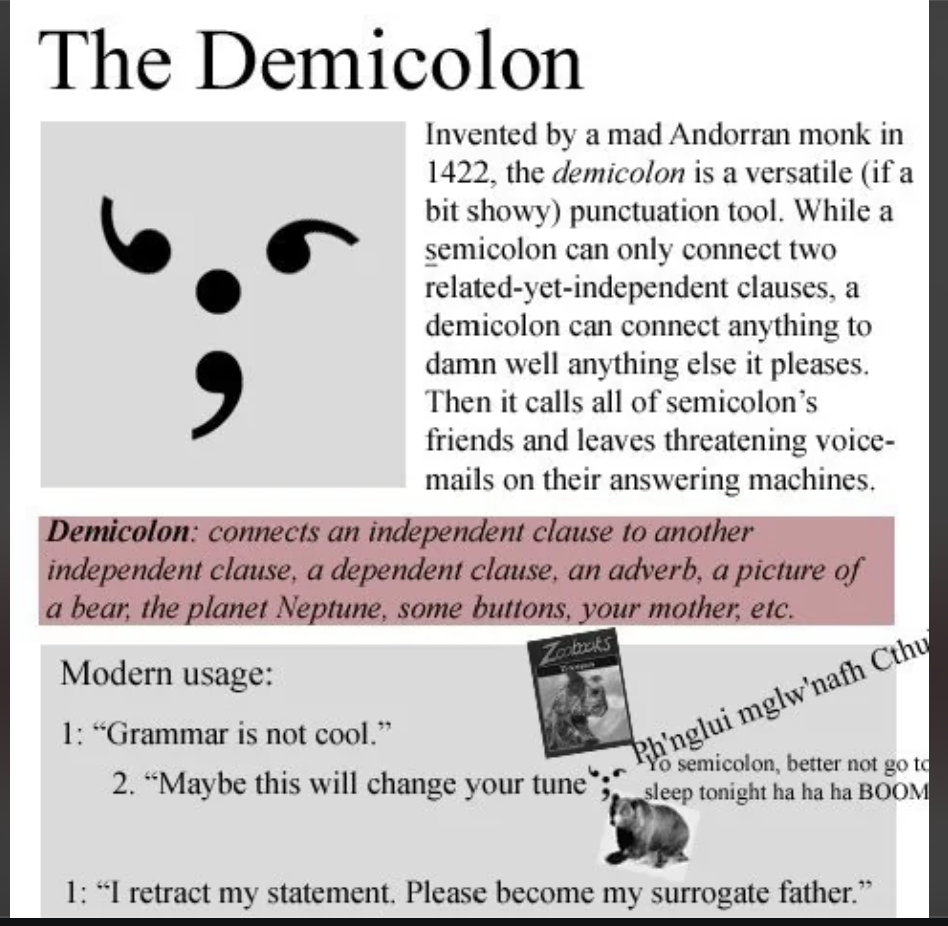
Joining the ranks of purely speculative punctuation such as the interrobang, and the fairly common but obscurely named dinkus, is the “demicolon.” Someday, it may find a spot in some brief, somewhere:
In Donarski v. Eckard Land & Acquisition, LLC. 05-25-01304-CV (Tex. App.—Dallas Aug. 18, 2026, mem. op.), the Fifth Court of Appeals at Dallas reversed the trial court’s denial of special appearances filed by seven nonresidents. The claims involved their investments in Eckard through special purpose entities.
The Court’s opinion catalogued each individual’s actual Texas contacts—mainly, attendance at investor conferences Eckard hosted—and found them insufficient to sustain personal jurisdiction over them. For example, “Harbott attended one [conference] in San Antonio from May 4-7, 2023, for networking, relaxation, and education, not for conducting business,” Ryan Raymond “attended a single conference in San Antonio for networking and denied conducting business or forming business relations during it,” and “Hughes never attended any conference hosted by Eckard in Texas.” No. 05-25-01304-CV (Aug. 18, 2026).
Lest you think the TCPA had faded away — in J.I.G., LLC v. Neugebauer, the Fifth Court reversed the trial court’s denial of a TCPA dismissal motion, concluding that the relevant pleading failed “because it never identifies the allegedly defamatory or disparaging statement. The pleading does not identify who made the statement, when it was made, or to whom it was published. Instead, Neugebauer alleges only that J.I.G., directly or through an unnamed agent, made at least one false statement about him. The TCPA requires more.” No. 05-25-01169-CV (Aug. 17, 2026).
In Huffines v. Globe Express Trucking, the Fifteenth Court dismissed as moot the State’s interlocutory appeal from a temporary injunction and jurisdictional ruling—but declined the State’s request to dismiss the underlying suit entirely.
Specifically, a trial court had enjoined a law requiring administration of a “historically underutilized business” program on a “race, ethnicity, and sex neutral basis.” The Comptroller amended its rule, mooting the interlocutory appeal. As to the entire case however, dismissal was not automatic, as the plaintiffs’ pleadings did not affirmatively negate jurisdiction and they can amend on remand to target the Comptroller’s newly adopted final rules. No. 15-26-00091-CV (Tex. App.—15th Dist. Aug. 20, 2026, mem. op.),
TCP Park, a partnership case discussed yesterday, also held that declaratory relief, intended to reinstate a diluted ownership interest, was barred by the one-satisfaction rule – where the plaintiff had already recovered damages for the loss of value of that same interest. Because each remedy—the declaratory relief and the loss-of-value damages—addressed the single injury of the lost partnership interest, awarding both would constitute an impermissible double recovery. No. 05-24-00473-CV, Aug. 3, 2026,
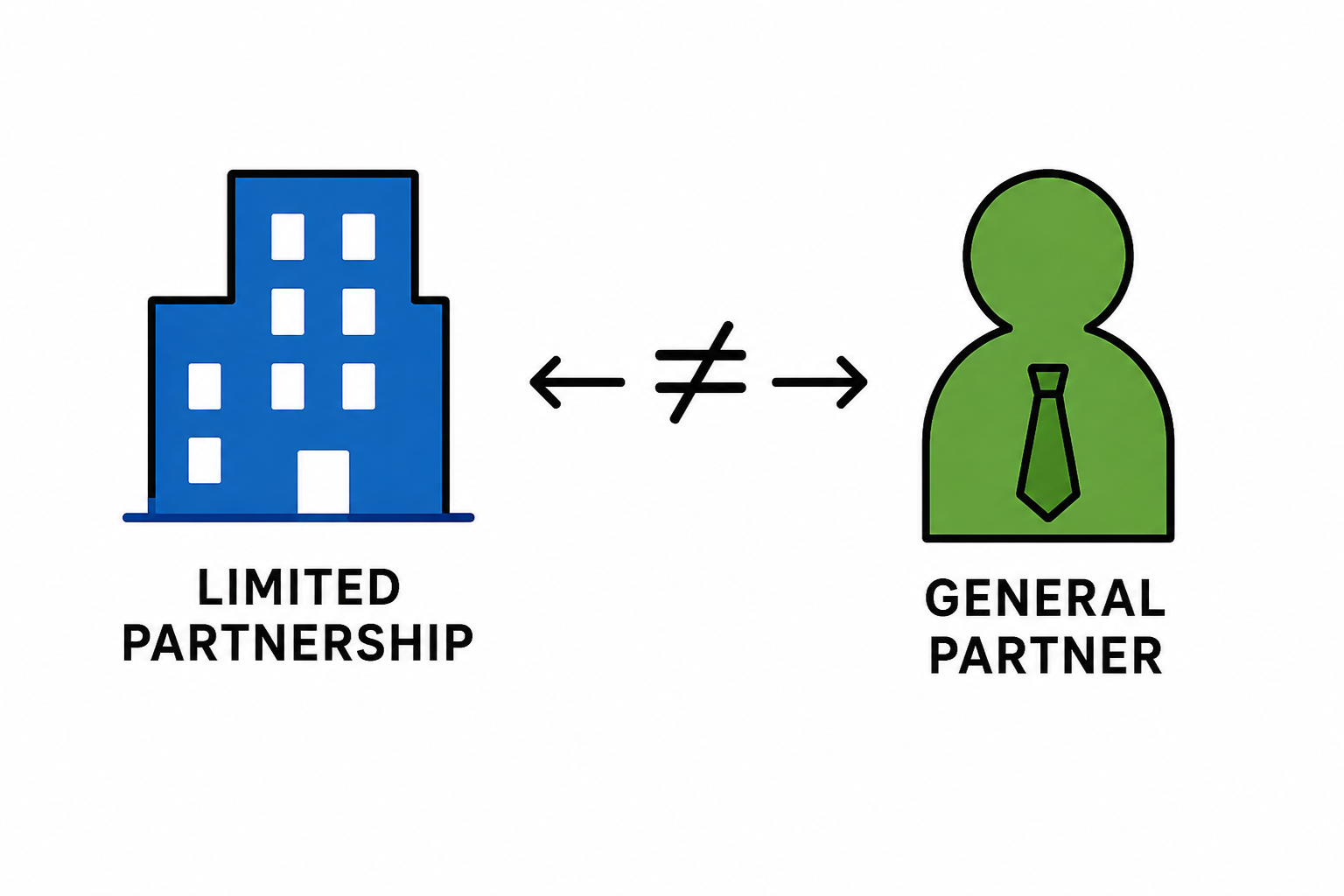
In TCP Park 10 LP Fund, LP v. Park Ten Commons Partners, LP, the Fifth Court addressed whether a limited partnership is jointly and severally liable for the wrongful acts of its general partner. The Court held that even though a GP serves as the limited partnership’s agent, the partnership’s liability for the GP’s conduct does not rest on a general agency relationship. Rather, under Texas Business Organizations Code § 152.303(a), the partnership is liable only if the GP acted in the ordinary course of the partnership’s business or with the authority of the partnership.
Thus, because the questions whether the GP acted in the ordinary course of the partnership’s business or with its authority were never submitted to the jury, the limited partner’s claim that the partnership was liable for the GP’s breach was waived under Texas Rule of Civil Procedure 279. The Court also distinguished authority standing for the opposite proposition, that a GP is jointly and severally liable with the partnership for partnership debts. N≠o. 05-24-00473-CV, Aug. 3, 2026
TAT Express, Inc. v. BlueGrace, LLC arose after BlueGrace’s eighteen-wheeler caught fire roughly sixty to eighty miles after TAT performed repairs on it. The Fifth Court rendered judgment against BlueGrace’s negligence claim, holding that expert testimony was required to link the fire’s cause to TAT’s repair work and that BlueGrace’s lay evidence could not carry that burden. No. 05-25-00255-CV (Aug. 10, 2026).
Volato, Inc. v. RPM Flying Ventures, Ltd. arose from a failed fractional-ownership deal for a HondaJet HA-420: RPM agreed under a Commitment Letter (which included a broad arbitration clause) to buy a 12.5% interest for $949,000, but when the transaction fell apart, RPM and several affiliated, non-signatory entities sued Volato, and the trial court compelled arbitration only as to the parties who had actually signed the Commitment Letter.
The Dallas Court of Appeals reversed in part, holding: “Because the nonsignatory plaintiffs seek to enforce rights arising from the Commitment Letter, they are bound by its arbitration agreement. The agreement also clearly delegates arbitrability questions to the arbitrator. The trial court was therefore required to compel arbitration and stay litigation of all issues subject to arbitration, leaving the remaining arbitrability questions for the arbitrator to decide.” No. 05-25-01444-CV (Aug. 14, 2026).
Emeanua v. Bu Ike Social Clubholds that a social club could face breach of contract liability when it disciplined members without following the voting procedure required by its constitution and bylaws. The Fifth Court treated the club’s governing documents as a contract between the club and its members, then focused on the bylaw requiring a decision “by simple majority” before ethics-committee recommendations could take effect. Specifically, the Court held that “simple majority” meant “more than fifty percent of those voting,” and the club’s 32 votes in favor out of 66 total votes fell “two votes short of a simple majority.” No. 05-24-00851-CV, Jul. 22, 2026.
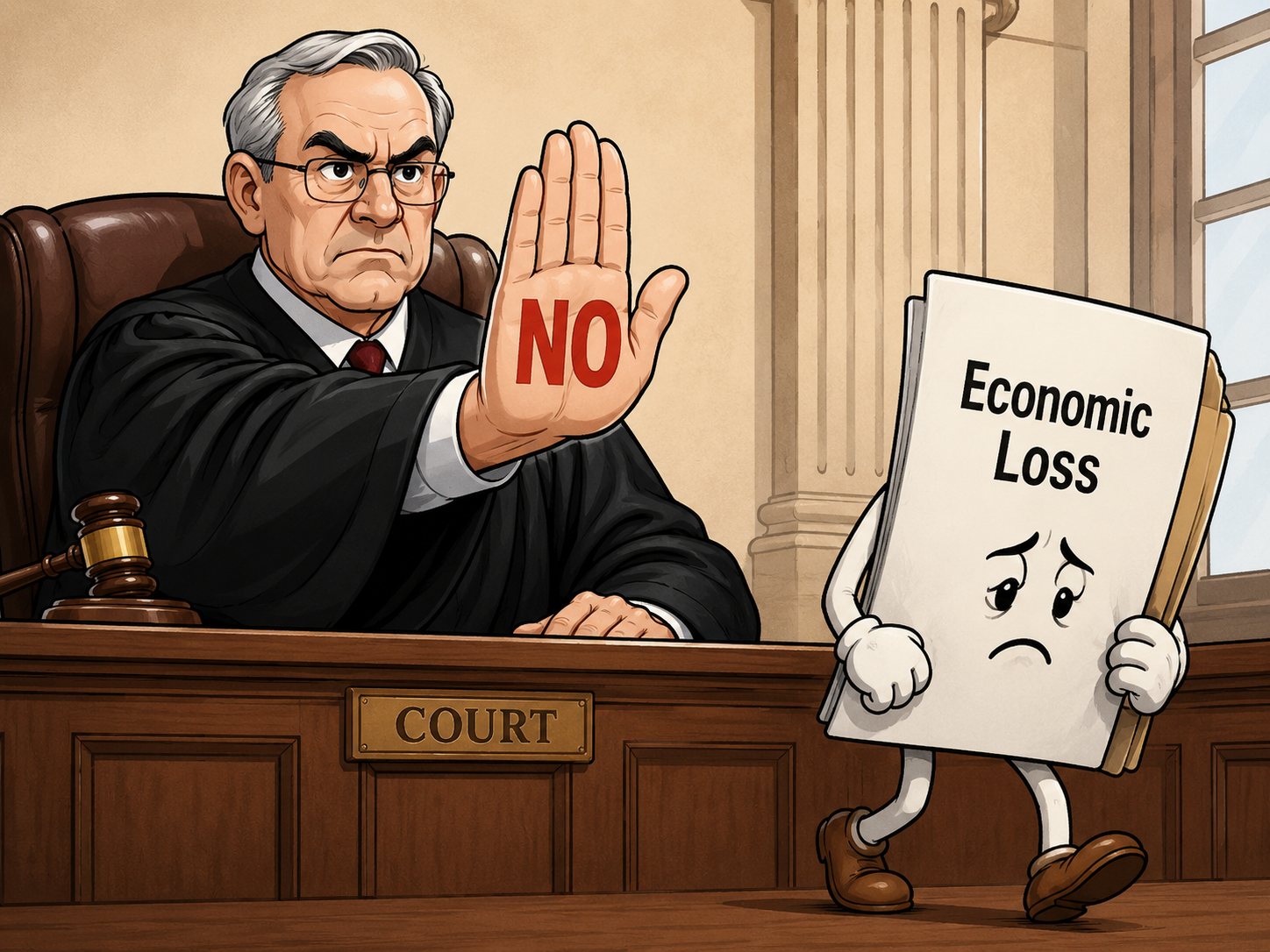
In Kinder Morgan Treating LP v. North Park Advantage Walden MRU, LLC, the Dallas Court of Appeals reversed and rendered in part a $5,645,810 negligent-misrepresentation judgment against a natural-gas treater in favor of a pipeline-project investor, holding that the plaintiff’s tort recovery was foreclosed by the economic loss rule.
Drawing on Wal-Mart Stores v. Xerox State & Local Solutions, No. 05-18-01421-CV, 2024 WL 5087116 (Tex. App.—Dallas Dec. 12, 2024, no pet.), the Court reasoned that “where a contract might readily have been used to allocate the risk of a loss,” courts prefer to leave the parties to their contractual remedies rather than add tort duties in tort. Because the parties here had the ability — and, on the record established about their dealings, the opportunity — to allocate that risk by contract, negligent misrepresentation was not an available claim. No. 05-24-01447-CV (July 1, 2026).
Inman v. Loe revived a former LLC member’s suit over his removal from the company he helped found. Specifically, the Fifth Court disagreed with the trial court’s conclusion that the company agreement as unenforceable for lack of consideration, because the plaintiff’s promise to work full-time as a manager and officer was consideration for his membership interest. The alleged failure to perform that work did not mean consideration was absent at formation; instead, “consideration was provided but as the trial court found, not delivered.”
Additionally, as to limitations, certain conduct from 2009 showed exclusion from management and operations, but not divestiture of the plaintiff’s ownership interest, because the company agreement and Texas LLC law required formalities for transfers, withdrawals, or expulsions of membership interests. The plaintiff’s ouster accrued only when the company formally voted on August 23, 2010, to remove him as a member, so his March 2014 suit was timely under the four-year limitations period. No. 05-25-01351-CV, Jul. 23, 2026.
In re Apkudo, Inc. saw the Dallas Court of Appeals conditionally grant mandamus relief, ordering a Dallas trial court to stay a contract suit among Apkudo, FedEx Supply Chain Logistics & Electronics, and T-Mobile USA in deference to an earlier-filed Delaware lawsuit involving the same parties and subject matter. The Court observed:
Here, the two lawsuits concern the same subject matter and involve the same issues. Apkudo’s Delaware lawsuit and FedEx’s Texas lawsuit both seek a determination by the respective trial court as to whether Apkudo has breached the Subcontract and Work Order No. 2 by continuing to provide services to T-Mobile after T-Mobile and FedEx terminated their relationship. Both lawsuits also require the respective trial courts to determine whether Apkudo has violated the nondisclosure provisions of the governing contracts.
The Court also rejected the relevance of the filing date of a related Texas Rule 202 petition, and noted that “dominant jurisdiction” cases were still relevant even though interstate comity was a distinct concept. No. 05-26-00579-CV (July 22, 2026).